
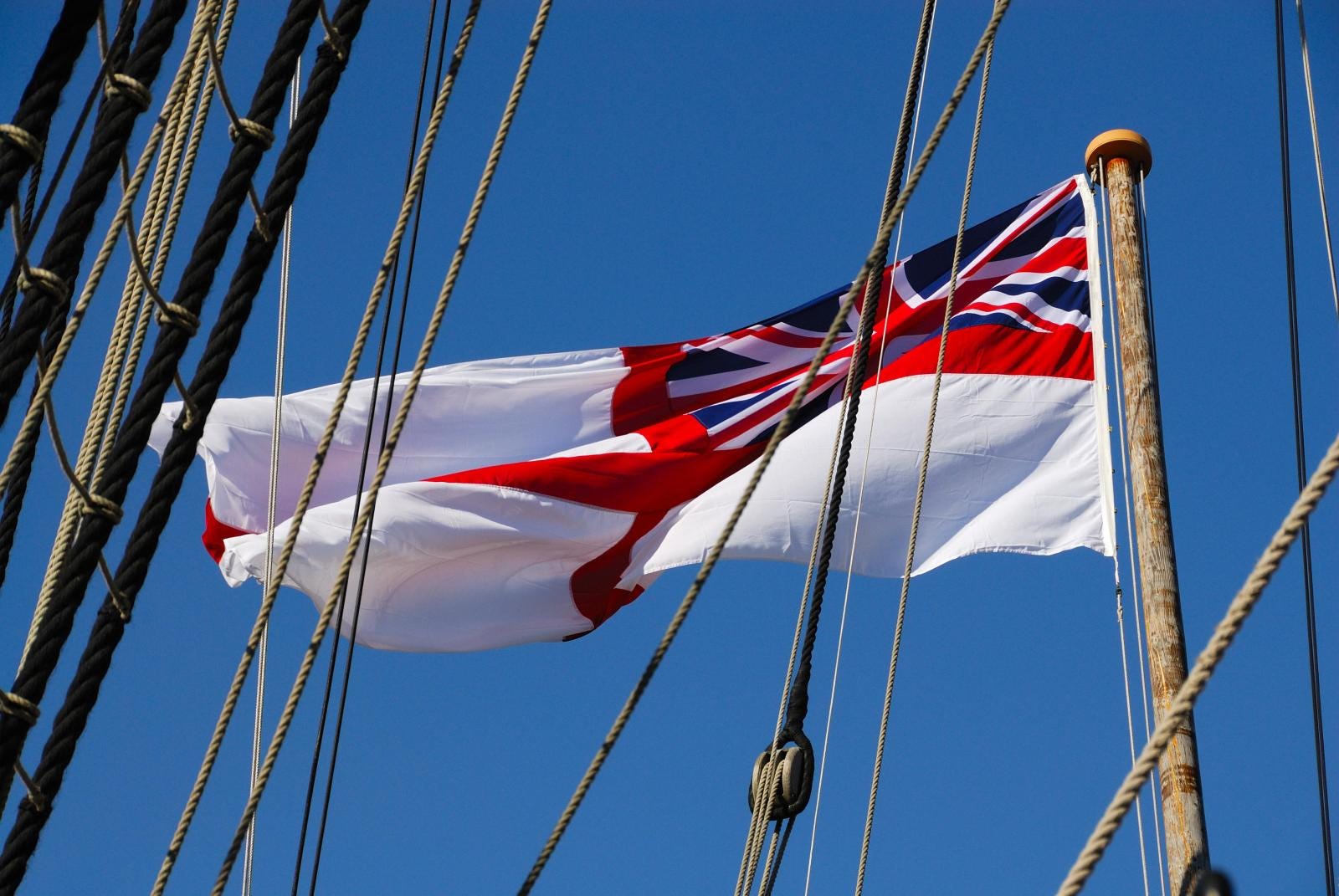
2026 should be remembered as the year the Royal Navy symbolised something larger than its own difficulties: it was no longer the Royal Navy of old, and Britain was no longer the seapower that had sustained it. While the ships have not (yet) all disappeared, the White Ensign still flies and sailors and Royal Marines continue to serve, carrying responsibilities whose demands remain real while the gap between task list and resources ever widens. Yet, the continuation of a naval service could no longer establish the continuation of the historical relationship between navy, nation and sea.
That is the judgement around which my work this year has increasingly converged. It must now enter the mindset through which Britain considers the Navy’s future. Otherwise, that discussion begins by assuming the survival of precisely what has been lost.
2026 represents a critical juncture, but no historical transformation of this scale occurs within a single calendar year. Britain did not wake one morning in 2026 to discover that centuries of maritime experience had vanished. The changes had accumulated across generations, often concealed by the survival of familiar institutions and language.
A date can nevertheless identify the moment when continuity ceases to provide a convincing explanation. It can mark recognition that an institution has become something fundamentally different, even while retaining its name.
That is the significance of 2026. The Royal Navy became an expression of the distance between Britain’s maritime inheritance and its present condition. What had long been discussed as decline now required a more difficult acknowledgement: the historical relationship itself had broken.
No single event proved it, but two moments made it hard to avoid. In March, when British citizens and interests were exposed in the Middle East, the question the British public has asked across five centuries returned: where is our Navy? Later in the year, Russian warships became a routine presence in the waters that helped make England a seapower. The Royal Navy shadowed them professionally, but this was never a question about the sailors. It was about the state behind them.
The Channel had not changed. Britain had.
I set out that evidence in Britain has failed in the Basics of Naval Power and 2026: The Year Seapower went missing.
“The Royal Navy of old” therefore means more than a larger fleet or a period of greater international prestige. It describes a service whose place in national life emerged from Britain’s understanding of itself as a seapower. The Navy’s purpose belonged within that understanding. Its future could not be separated from the circumstances, interests and character of the state.
This brings us to the second significance of 2026: how far naval power and seapower have become intellectually separated.
The distinction between them is longstanding. Naval power concerns naval forces and their employment. Seapower encompasses a wider relationship between the sea and the political, economic, cultural and strategic life of a state. A navy operates within that relationship, but its existence cannot establish the existence of the whole.
What matters now is the depth of their separation. Britain continues to discuss the Royal Navy while increasingly lacking the wider conception of national life that once made its purpose intelligible. The naval instrument remains a subject of attention; the seapower state is assumed, misunderstood or absent.
The Royal Navy of 2026 embodies that separation.
We can discuss what the service does, celebrate its achievements and argue over its future without confronting what Britain has ceased to be. Indeed, the familiarity of the Navy makes that avoidance easier. Its continued presence supplies reassurance that something enduring remains beneath the immediate difficulties.
But the survival of naval power is insufficient evidence of the survival of seapower. Britain’s case demonstrates why the distinction must be followed through to its consequences.
The clearest illustration was not British at all. At Hormuz this year, shipping companies repeatedly asked for naval escort, and the most powerful navy in the world repeatedly declined, citing risk. The last time American warships worked those waters under comparable threat, in the Tanker War of 1987–88, they escorted. A navy that will not protect the shipping it exists to protect still has ships. What it has lost is the purpose that gave them meaning.
A country can retain a navy after losing the understanding of itself that once gave that navy its distinctive national meaning and advantage to achieve its goals and security. What is missing in many education today is the critical thinking skill of ‘Why’? ‘Why was it done this was before and why was it so successful’? Opening that door leads to enlightenment, illuminating how forebears made decisions based on hard experience and tough realities
But there is vast danger in inherited assumptions. Much discussion of the Royal Navy’s future still proceeds as though Britain remains a seapower experiencing temporary or reversible difficulties. The underlying relationship is therefore treated as intact, and the task is imagined as recovering strength within it.
New capability matters, and this month’s commissioning of the Royal Navy’s first autonomous squadron is part of that story. But new capability, however welcome (or questionable, like the hybrid navy concept behind it), answers a question about the instrument. It does not answer the question about the relationship.
My earlier work has challenged that premise. Britain’s predicament concerns the deconstruction of the relationship itself. The sea remains fundamental to national life, but dependence upon it does not automatically produce the understanding or political character of a seapower. The reality is that geography persists: seabed to space strategy and warfare—the art of war as it will be moving forward is a maritime concept, and this cannot be escaped, but a state’s capacity to understand what geography means can deteriorate.
That is why inherited language has become dangerous. References to maritime heritage, naval tradition and an island nation can suggest a continuity they no longer explain. They allow historical identity to stand in for an examination of present circumstances.
The Royal Navy’s history cannot perform that examination for us. Nor can the service’s professional achievements carry the burden of proving that Britain remains what it once was.
To acknowledge this takes nothing from those serving today. Their efforts belong to the reality we must understand. They cannot, through professional commitment alone, preserve a national relationship that extends far beyond the service. The distinction is essential both to respecting their work and to judging the state that directs it.
What must change is the thinking of many in Britain, including supporters of the Royal Navy and even its technocrat commentators—don’t forget, as I’ve laid out before, former fighting sailors are not the best ambassadors for the naval service when they talk technical matters to an uneducated and uninterested public and government. Educating about seapower and national strategy is the place of Admiralty and civilians, not those who should focus on being the ultimate fighting sailor and marine.
The ‘Silent Service’ could afford its silence while someone else spoke for it. Without that someone, the silence has cost it dearly.
The consequence is a change in the starting point of debate on the Royal Navy.
Britain must consider the Royal Navy’s future with the recognition that the historical seapower state no longer supplies its assumed foundation. Whatever future is proposed must begin with the country Britain has become, against the harsh realities of what it cannot change (the optimal path with its resources) and its geography.
That does not predetermine every answer. It does prevent us from treating the future as the straightforward continuation of an interrupted past.
There is a difference between imagining the future of a navy within a seapower and imagining the future of naval power after that relationship has ended. The questions acquire different meanings. So do claims about recovery, renewal and continuity.
The greatest of strategic minds, Sir Julain Corbett’s (1854-1922) first question was never “how many?” It was “for what?”
“Recovery of what?” may be the question on some tongues. Renewal within what understanding of the nation? Continuity with which part of the historical institution?
These questions must precede confident declarations that the Royal Navy will return to its ‘former place’, whatever that may be. That place depended upon more than the service itself. It belonged to a relationship whose loss cannot be overcome simply by invoking its memory because the situation is far more severe than just about a military service, it’s about losing a national strategy and ejecting hundreds of centuries of experience.
For the Royal Navy itself, the direction I would propose is this. The question is no longer how to restore what was, but whether Britain chooses to reconstruct a seapower at all. That choice is political and educational before it is naval, and it is a choice, not an inheritance. Seapowers are made, maintained and chosen. They can also be allowed to lapse.
The intellectual separation of naval power from seapower therefore changes how the future must be conceived. Britain cannot assume that sustaining one will automatically restore the other.
There is understandable resistance to describing an ending while an institution remains active. Endings are easier to recognise when accompanied by dissolution, defeat or a formal announcement. Terms like ‘decline’ and ‘seablindness’ have become handy stopgaps to mask reality.
Historical change rarely offers such clarity. Sometimes an institution continues while the world of relationships that made it what it was disappears around it. Its survival then obscures the scale of the transformation.
The Royal Navy and Britain’s understanding of the sea both took centuries to build. Neither needed enemy fire to unmake them, only generation (s) that stopped asking why they existed. A bit like it only takes a generation to loose liberty and freedom too.
2026 should mark our recognition of that condition.
The argument is not that the Royal Navy has no future. It is that its future must be thought about after acknowledging the break with its historical identity and Britain’s former character as a seapower. The price will be painful if it is not addressed, but the reality may be that no one answers it because the intellectual foundations and culture derived from the organisation of defence will not allow such fundamental questions to be asked, let alone by a naval leadership that has been so poorly educated.
That is what “1546–2026?” asks us to confront. The question mark demands examination of what continued and what ended. Pointing to the continued existence of ships cannot answer it.
My previous articles (and 20 years of work including a PhD) explored (amongst other things) how Britain arrived here. The judgement that follows is now the starting point for 2027 and beyond.
In 2026, the Royal Navy symbolised that separation. From here onwards, thinking about its future must begin by recognising it. Educating the state, through the case study of proven experience, is the future, not endless discussion of hybrid navies, warmongering or fanciful wish lists that are of little use compared to embracing what a proven national strategy can provide.