

For more than twenty years, I have studied the relationship between organisation and thinking about strategy and acting strategically: how institutions preserve experience, shape advice and determine which choices reach political authority. My PhD at King’s College London, Deconstructing the Seapower State: Britain, America and Defence Unification, (2021, 1) examined how the process of defence unification––the creation of defence organisations in Government like the U.S. Department of Defense (DoD) and U.K. Ministry of Defence (MoD)––reshaped strategic thought and national strategy. That research, convinced me that the problems of modern defence organisation reach into its foundations and subsequently the clock was ticking on when the next fundamental change is due.
A series of articles before publication of my book have been written since and referenced in this article, based partially on the PhD, to keep the conversation alive. In Is it time to Revisit Defence Unification?,2 I asked whether we should reopen questions that generations of defence reform had largely avoided. My answer now is unequivocal: fundamental change is overdue, and replacing institutions that repeated reform cannot repair or improve must be a serious option, with all options on the table.
I should be clear about where my loyalty in this argument lies, because it is not where readers of might expect. It lies with national strategy. If getting that right means fewer armed services—mergers, retirements, outright abolition—then so be it. If it requires new services, commands and forms of organisation, those must be possible too. That includes institutions whose history I know best. I’ve used naval and maritime history often as the case study because it’s been the best example in which to expose failures that run far beyond their own domains and out into the wider organisation of defence. Other examples exist in my research spanning all services and defence as a whole.
The case for the particular unified structures Britain and America built (amongst other nations) was never as settled as sixty and eighty years of institutional repetition have made it feel, or to be precise, how government and defence have wanted many to believe. Today, their familiarity has become a substitute for justification and their survival has acquired the appearance of vindication. An irony considering they replaced institutions far more proven and older, yet were swept away with little care. We can learn from this and show care as we boldly think about the next version of defence organisation. But the fact that generations have worked within them without being encouraged to examine whether the reasoning behind their creation withstands scrutiny.
Three failures compound each other in these histories: foundations of the case for centralised unified defence organisation were built on rushed, bodged or self-interested analysis of wartime and various circumstances, like technology of the then not the now or tomorrow. Resultingly political and financial power was concentrated at the expense of effective scrutiny, and a habit of treating dissenting professional advice as disloyalty rather than information in a vital forum of debate. Together, they can prepare defeat in peacetime, long before war or conflict exposes it.
Understanding those failures requires returning to the arguments through which unification and centralised defence acquired its authority. The familiar explanation is designed to be reassuring to politician and public alike: the experience of the Second World War and new post-war technologies demanded cooperation while separate institutions generated rivalry and waste: centralisation supplied coherent direction and better command and control for all. The historical record is considerably less reassuring.
In U.S. Defense Unification and the U.S. Navy,3 I examined how interpretations of wartime experience, political pressure and service rivalry shaped the struggle over American defence after 1945. Influential Army advocates, working alongside proponents of an independent air force, pursued a settlement that would privilege their strategic, tactical and operational assumptions wrapped within their institutional priorities and agendas. Unification offered the means to change whose arguments, voices and positions carried authority. Claims about better strategy when I examined them, where in short, lies.
The label attached to the Navy’s response tells the same story from another direction. In The Revolt of the Admirals and Today’s Battle Over the Defense Budget,4 I challenged the framing of 1949’s institutional dispute as a “revolt”—a term promoted by media consultants working for the Department of the Air Force to make legitimate testimony to Congress sound like insubordination. Once disagreement becomes “revolt”, the substantive questions about strategy, capability and oversight are easier to dismiss. Organisational language can prejudge arguments before they are heard on their merits.

Britain’s experience adds another dimension. In The UK Ministry of Defence at 60,[5] I argued that concentrating political power and financial control was central to understanding the settlement. The claim that this necessarily produced superior national strategy confuses the justification presented for change with the interests and purposes that drove it. Making decisions easier to impose does not make their strategic foundations sounder.
The Admiralty’s abolition in 1964 removed a distinct, authoritative institutional route through which Britain’s circumstances as a maritime, trade-dependent state were represented to government. Many voices, mostly Navy and some Army, warned of this and were sidelined during Lord Mountbatten’s personal drive for an integrated Ministry of Defence. Their concern extended beyond service prestige to the preservation of strategic knowledge and its influence on political judgement. The transfer of administrative responsibilities could not, by itself, preserve the experience, institutional memory and access to authority upon which that contribution depended.
Nor does the naval profession escape criticism. In Endgame for Seablindness: defence organisation and the future of the Royal Navy and the United States Navy, I criticised its retreat into narrow technical concerns, nostalgia and poor communication, an outcome of unification that did a disservice to navy and nation as a whole,. That has also now failed in 2026 as seapower has collapsed, replaced by naval power undermining national and global security.5 No service earns permanent strategic relevance through its history when it fails to educate why that history is useful to the state. The institutional interests of every service require scrutiny wherever they conflict with national purposes.
The push and pull of centralisation and decentralisation runs through this history. Central direction can enable common action; independent institutions can preserve expertise and challenge assumptions. Either can also protect power, obstruct judgement and frustrate cooperation. The strategic question is what should be brought together, what should remain distinct, and why. Neither centralisation nor decentralisation deserves to become an article of faith, and to some degree why Britain achieved a better setup in the 1920s and 1930s, not without flaws, of its Committee of Imperial Defence along with an Independent Admiralty.
That scrutiny becomes particularly important when governments create new institutions. The creation of the United States Space Force in 2019 should have forced the underlying questions of defence organisation back into the open, for every service and for the entire defense bureaucracy. Anti-Fedalists and those who seek better national fiscal control should have had a ‘field day’ at that moment but were suspiciously silent.
Space demanded expertise, resources and sustained attention. Establishing that need did not settle whether another armed service, nested inside the inherited structure, was the right answer. Instead, Space Force was placed within the Department of the Air Force, carrying inherited institutional relationships and cultural assumptions into the new arrangement. A move I believe will hinder America in space, not benefit it, in the long run.
The need for specialist knowledge became an argument for another organisational division, requiring further coordination with the rest. Unity of effort was among unification’s founding promises yet in the end became a slogan than reality. Yet the response to a new strategic demand was to multiply institutions and then address the resulting requirements for closer integration: something the Admiralty and U.S. Department of the Navy were concerned about during the first space race.
That calls the underlying model into question. The arrangements for American defence organisation itself created an independent Air Force in 1947, but counting services is never sufficient and more does not mean better. The issue is whether the whole structure serves a coherent national strategy, one based on experience, and whether that question gets asked before another component is added or yet another reform complicates things further. Space Force should have made continued acceptance of the inherited structure impossible without renewed justification. It did not. In short, Space Force shouldn’t have existed before a big STOP sign kicked in legally, to ask questions about not just about creating another service but if defence organisation was fulfilling its core duties as it should.
Its stakes reach beyond any service’s remit. Space connects communications, navigation, infrastructure, commerce and science, as well as the influence of armed force. In From Seablindness to Spaceblindness,6 I explored what maritime strategic thinking can contribute to that problem: both environments demand attention to the connections through which a state lives, communicates and exercises power. Reducing either to a single service’s operations narrows the problem before strategic judgement begins.
The organisational boundaries of defence risk becoming the conceptual boundaries of strategy itself: something entirely antithetical to thinking about strategy and then acting from it. A department may become more integrated while remaining strategically impoverished and its command lines more nebulous than clear. Better coordination within the military cannot compensate for an inadequate understanding of national purposes and power and ex complex overlaps between services and their technologies.
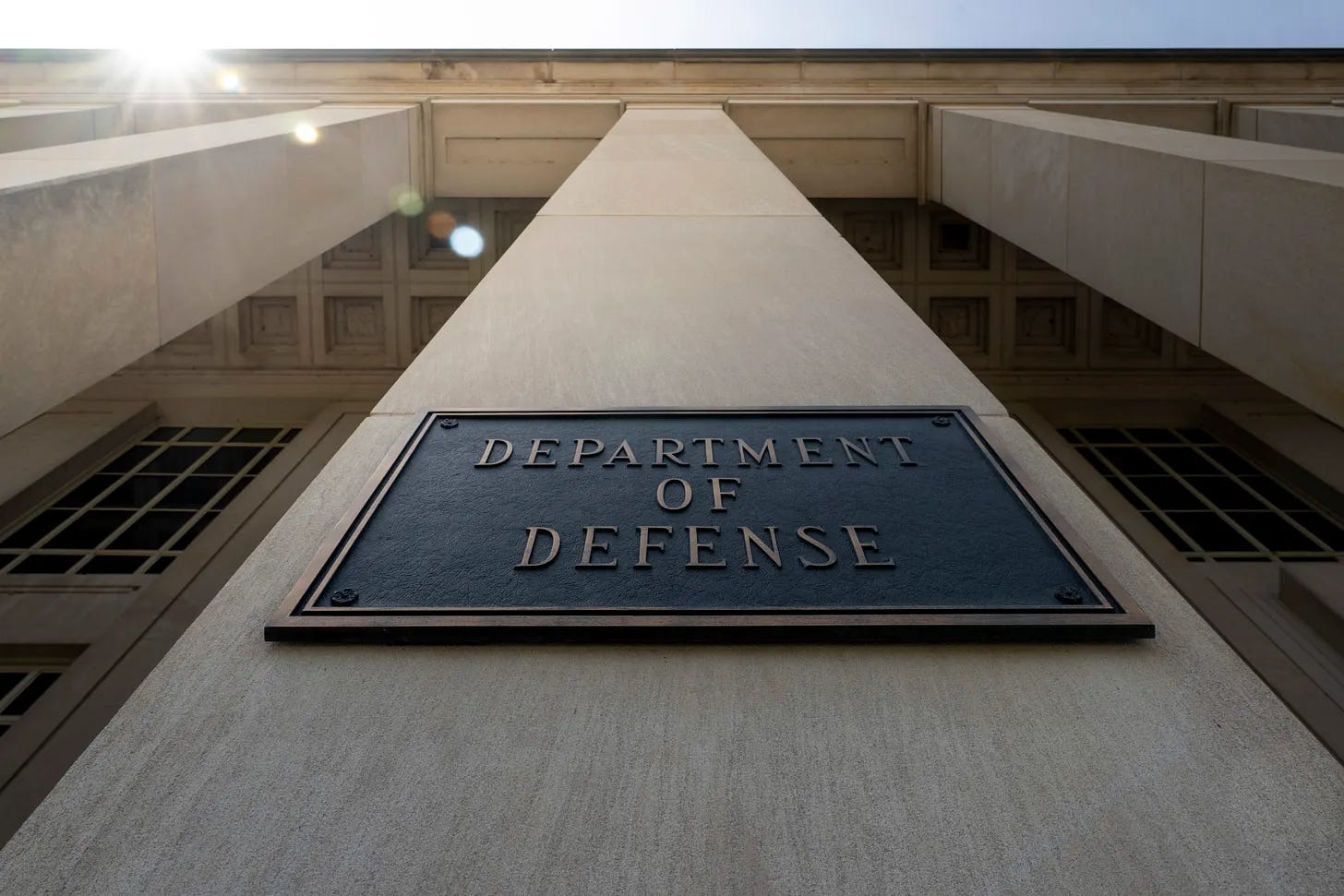
This is why the answer must begin with the circumstances of the state. Britain and America reached different settlements. Their geography, resources and strategic experience differ enough that no single organisational template transfers cleanly between them, let alone to a third country adopting an ally’s habits by imitation. The implications of these histories reach defence organisations worldwide, but each government must answer for its own circumstances. Ultimately, there is no universal model that relieves a government of the responsibility to think. Nor does renaming a department resolve its weaknesses. In A ‘Note’ about a U.S. Department of War, 7 I argued for preserving a forum where competing services could contribute without one worldview dominating. A change of name can revive an old imbalance while leaving deeper problems untouched.8
Reconsidering those problems must permit consequences far greater than a new name or another redistribution of responsibilities. Endgame for Seablindness9 explicitly entertained replacing institutions that repeated reform cannot repair. That possibility needs to become a an option now. Governments must examine the survival, scale and function of every element through which they exercise defence authority. That examination must include the possibility that some should cease to exist independently.
If the Pentagon needs to be sold off or demolished, why not? Its five sides offer no strategic value. The serious point, is that neither the building nor the institutional arrangements it symbolises should be beyond reconsideration. The same applies to Britain’s Ministry of Defence and its equivalents elsewhere. Just because they are familiar does not confer a right to permanence or in some cases, if the setup for many has become too comfortable, then that comes with too much baggage over time to run an organisation well.
This is about the future. Entirely new forms of defence organisation must be possible. New or merged military services and commands may need to emerge, with responsibilities that cut across inherited boundaries while others may need to disappear. Warfare, as integrated as it is: ‘from seabed to space’ now demands that we reconsider how the whole is organised. We cannot indefinitely meet new requirements by adding institutions, or ‘fiddling around the edges’ while protecting the assumptions governing everything around them.
Warfare, as integrated as it is: ‘from seabed to space’ now demands that we reconsider how the whole is organised.
A review that guarantees the inherited structure’s survival has already restricted its conclusions before it starts. This is mistake made over reforms made since the 1980s in the U.K. and U.S.
The inquiry must begin with national circumstances: geography, dependencies, resources, political purposes and exposure to disruption through conflict, or even war. The strategy that flows from that geography and the experience it has shaped will decide direction, which could be equally back to an old system, refreshed as much a building something new. Asking questions about modern defence organisation must establish what knowledge decision-makers need, how competing professional advice reaches them without being filtered by whichever institution controls the process (or can shout the loudest), and which responsibilities require common direction or an independent voice. Some functions may need more independence while others may need consolidation. Some may need to leave defence altogether. A ministry may need to shrink substantially or be replaced. A service may need to merge with another. The institutions and those with vast power over defence, like the Treasury, under review cannot be the sole judges of their own necessity: another mistakes of the reforms since the 1960s.
Furthermore elected representatives need independent research, professional evidence and access to arguments that established channels may exclude. Effective civilian oversight depends upon the quality and range of information available to those exercising it.
But note, there is no organisational utopia at the end of this. That was the lie at the heart of the Cold War organisations known as the ‘DoD’ or MoD’ when everyone knows and yet will not speak it, that its fallen far short of promises. The Admiralty warned this would happen and it has.
Reconstructing defence through haste, selective evidence or political theatre would repeat the failures the history of defence organisation exposes but be mindful the record held in many nations is full of simplifications, full of inaccuracies, wrote by those who wanted the system and maintained by those who want to keep it.
Importantly, change must preserve readiness and expertise while transferring responsibilities and authority. But those requirements strengthen the case for beginning deliberately now. Defective organisation can distort preparation, procurement, advice and operational choices long before the consequences become publicly undeniable. The people eventually ordered into danger may then be asked to compensate, through courage, for what political and institutional leadership failed to address through judgement. Their professionalism cannot absolve that leadership but history shows us both positively and negatively that organisation can make or break the success of the efforts of those serve. Something I proved in the PhD was that Royal Navy under Admiralty notably, by every metric, has outperformed the version under the MoD. For many this was a too bitter pill to swallow because the sandcastle built in careers in service to centralised defence had done the very thing they were not supposed to do: degrading efficiency or undermining effectiveness. You cannot have both, in perfect alignment but that defences have degraded under unified defence, in a form that has changed little since the Second World War, is a damning indictment of political inactivity on the topic. For the political body the reality being that the broken promises of what unified defence would achieve when it did not (that few have called out) left such a bad taste in their mouths that they would not touch the topic again. The price was simple: chaos, and from that, questions were asked that never truly got to the bottom of the matter. You can pick the case study, Afghanistan? Iraq? Vietnam? The Falklands War? Or what about other matters: budget management? Procurement? Private defence companies? The possibilities are endless when the door is open to ask: is defence organisation working the best it could or is there something more rotten, more fundamentally broken?
If anything my research showed that governments and the military are frankly too scared to open this door.
My forthcoming book sets out the historical foundations of this argument: how the choices made during defence unification reshaped strategic thought, how their contested origins became obscured, and how the resulting institutions narrowed the possibilities for defence. The price was strategy, and I lay that out as study of the past but a warning for the future. More than twenty years of work have convinced me that adjustment within unquestioned foundations is insufficient and therefore radical change in defence organisation is now well overdue. Its purpose must be to restore the ability to develop and execute national strategy, one that accepts the integration of seabed through space, and whatever that requires of the institutions or services currently arguing for their own continuation must be dealt with directly.
My fear is that the institutions and interests capable of postponing that reckoning will keep doing so until failure becomes impossible to explain away. Equally, it’s time for people to pick a side, national strategy or the comfort of service loyalty or the status quo of current defence organisation?
The body bags will probably pile up before the political will to replace failing structures finally arrives. That is the prospect we should be working to prevent. Waiting for casualties to make an argument already supported by evidence is itself a failure of responsibility as well as, duty.
https://kclpure.kcl.ac.uk/portal/en/studentTheses/deconstructing-the-seapower-state/


https://www.kcl.ac.uk/from-seablindness-to-spaceblindness


