
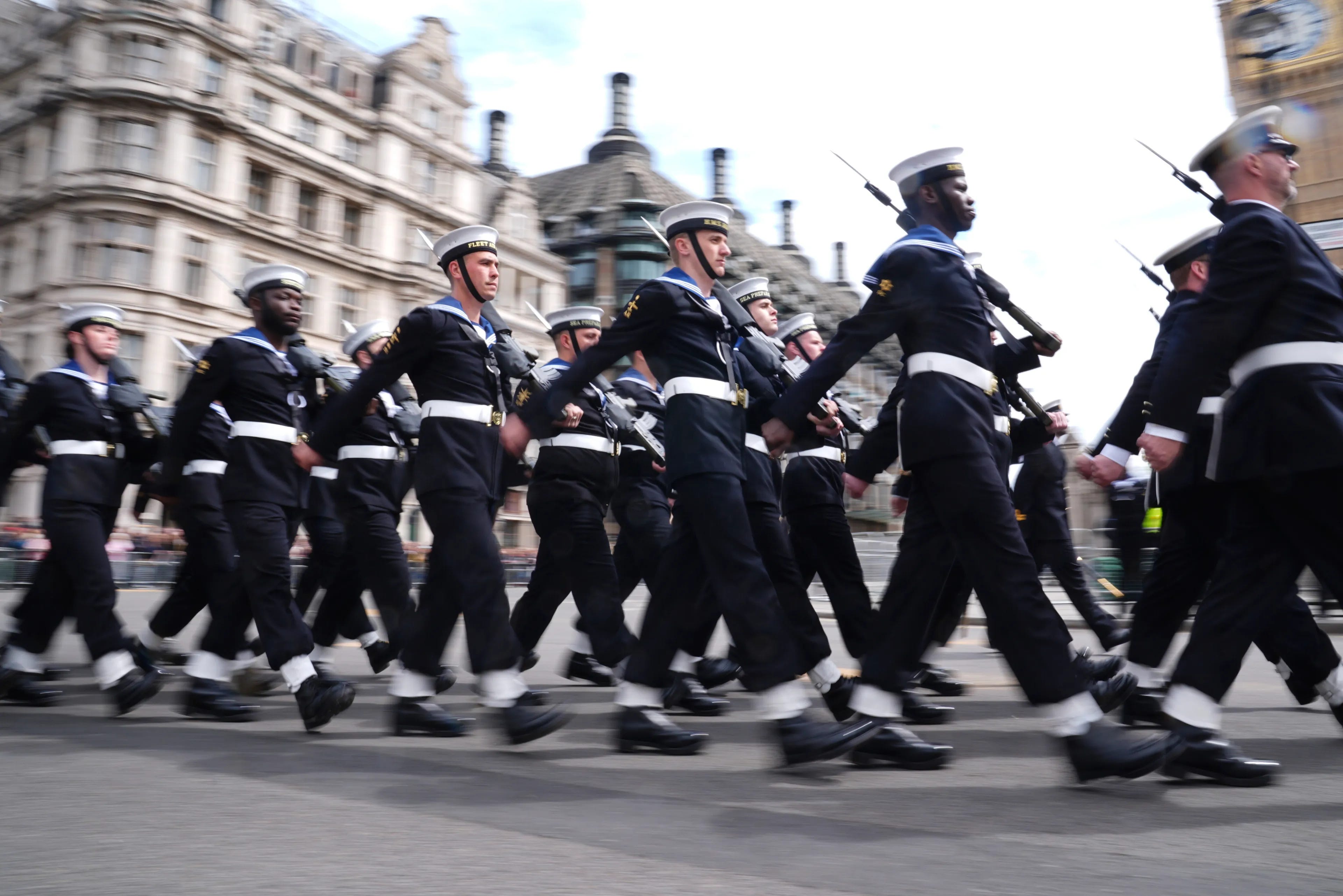
A navy can be admired and respected by the public while the state fails to understand seapower. Warships can draw crowds, its sailors command affection and its history, if educated about, hold a prominent place in national memory. Yet, those responsible for policy can remain poorly equipped to explain what seapower and even the broader maritime industry contributes to the country’s security and prosperity. Popularity and strategic understanding produce different things, in fact popularity can have very negative effects when that affection, or sentimentalism, for the past seeps into the serious business of thinking about strategy, doctrine and policy. That is because affection for a service or force does not supply a government with the reasoning required to employ and sustain it.
Every few years navies decide it has a communications problem. A new campaign is launched and from it there are open days, better photography, a social media push, a recruitment film with a soundtrack, a spokesperson with an easy manner. The service gets noticed for a while. Then the budget round arrives, the same arguments are lost, and the cycle begins again. Little do naval services realise this destructive cycle has only dug a deeper hole for them in hoping for eduation about what they do.
The pattern deserves a better explanation than “navies are bad at public relations”. Some are rather good at it. The truth is more complex, and it starts with the phrase itself. For a navy, public relations is a different thing from what it is for an army or an air force. Its first task is to educate the state to seapower: to government, officials and the poltical system understand what the sea means to the country and what options navies make possible. The public matter, but they come second. Navies have never really got public relations, at least in the contempoary era because they keep aiming it at the wrong audience, and treating it as the job they can excel at, when in reality it was never theirs to do.
I use the Royal Navy as the case study, because its history makes the argument clearest. But this can be replicated for many other navies around the world.
You must start with the oldest problem, which is not a failure of effort. The business of a navy takes place over the horizon. Most people live on land, work on land and make their decisions on land. A warship on patrol in a distant sea is doing something that matters enormously to the country and is invisible to nearly everybody in it.
Arguably submariners gave this condition a name: the “Silent Service”. It began as a label for one branch’s culture of secrecy, but it describes the evolution of the contemporary navy. Warships deploy, the mission is executed, and the best outcome is usually that nothing happens: the sea lanes stay open, the opponent stays deterred, the crisis never arrives, strategic advantage is maintained, communications remain available, commerce continues and a government keeps choices that might otherwise have narrowed. Success at sea produces no news.
Public relations works on a different principle. It trades in what can be seen, photographed and reported. Making naval work visible is useful, I do not dismiss that, but making its relationship to national policy intelligible is a different task, and it takes sustained education.
A navy’s survival has never depended, in the end, on public affection. It depends on a small number of people: ministers, the Treasury, senior officials, a handful of parliamentarians. They decide what the country builds, what it can afford and what it chooses to protect. For a navy, they are the primary audience, and the task is not to charm them but to educate them in what seapower is and why the state needs it. Never ignore Britain’s greatest affection to the navy were driven by people who delivered great victories, but they were also anomalies, rebels often in a rigidi system and certainly not ones that modern unified defence would permit today.
The public are secondary:t hat is not contempt for them. Taxes raised from the people finance defence, they supply the political climate in which a government decides. But a state that understands the sea will find it far easier to carry them along. But winning their goodwill is not the same as educating the state. A public that loves its navy will still be indifferent to a spending round if no one has explained, in terms that a Cabinet minister can use, what the fleet makes possible, what becomes impossible without it and what the alternatives cost. Pride at a ship launch does not become a defence settlement because applause, a pat on the back or a medal is not a argument for seapower.
The educational task also begins from a different place. The first questions concern the country. What sustains its economic life? How do goods and resources reach it? What relationships connect it to markets, partners and sources of supply? For an island, those questions lead quickly to the sea, and they establish why maritime strategy belongs within national policy at all. Publicity usually approaches from the opposite direction. It begins with the service: a ship, a deployment, a capability, an individual achievement, and then invites the audience to recognise its importance. That can be an effective introduction but that is where it often stops. But a minister may know that a warship is impressive without understanding which national dependencies require the capability it represents. While our sailors Professional excellence supplies no automatic answer to questions about commitments, resources or the consequences of withdrawal.
This is where navies differ most from the other services, and why borrowing their methods rarely works.
An army lives among the people it defends. Its soldiers are posted to garrisons and training grounds at home, its regiments carry local and county loyalties, and its deployments on land are seen, filmed and reported. Just as important, defence thinking in most countries starts from the land. The idea that war is fought and won on the ground is the unstated default of the whole system, so an army seldom has to explain why land matters at all. Its public relations is largely about recruitment, morale and affection, and it can afford for that to be so.
An air force had the opposite problem and solved it differently. Created in 1918, the RAF had to fight through the 1920s for its existence as an independent service, against the Army and Navy. It learned early to argue its case before Cabinet and the nation, and it was helped by something the sea does not offer: aircraft overhead are visible, and stories are propelled to powerful myths like the Battle of Britain as it is told about the sky above the places where people live. Air forces have survived because their culture from day one was about survivial, this may something in itself I won’t develer into here, their paranoia has been a core success in their hostile take over of the defence agenda.
Armies and air forces also have to explain deterrence, readiness, alliances and activities whose benefits are hard to observe. They have their own educational problems but , it is not to be ignore they engage more in circles at events with those who make decisions. A navy has neither of their advantages because its work is out of sight, and it cannot assume that anyone starts from the sea. A navy explaining seapower must connect activity at sea with the organisation of economic and political life ashore. The common military vocabulary of readiness, lethality and operational effectiveness explains important features of the force, but it cannot carry the argument for maritime strategy. A presentation confined to how the Navy fights leaves unexplained why the country needs maritime power in peace. Army and air force methods sell the service. A navy that copies them sells the service well and leaves the argument unmade this is because the former are tactical-operationals ervices a navy is strategic. Speed of their effect agains the poltical-cycle is potentially in favour or army and air forces.
The American objection
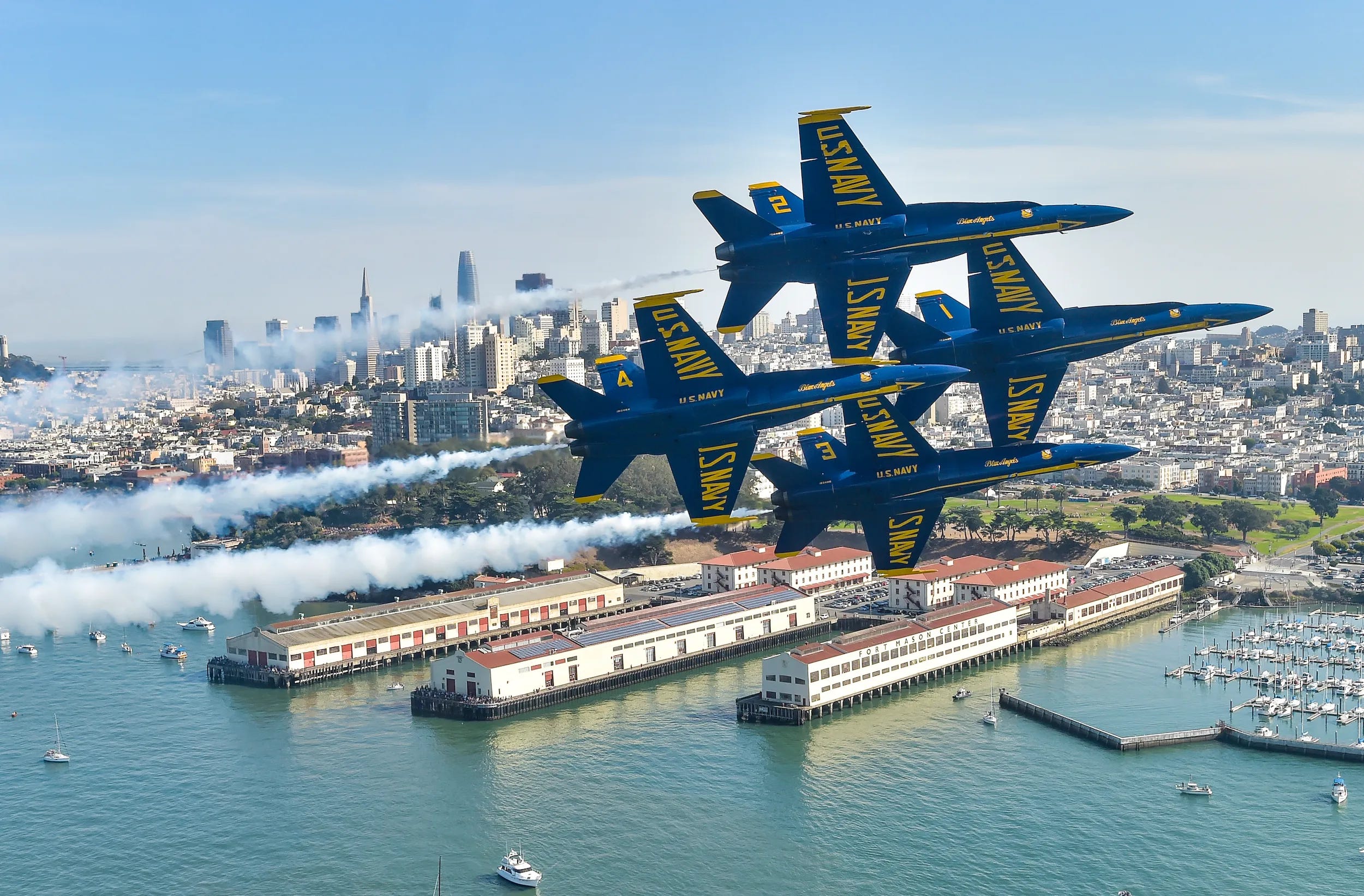
The obvious objection comes from across the Atlantic. The United States Navy puts considerable organisational investment into public engagement. Its Navy Week programme takes sailors and ships to communities without a substantial naval presence, and its American Connections programme carries sailors’ stories to local media. The stated purpose of Navy Weeks includes explaining the service’s relationship with national security and prosperity. These are purposeful efforts to connect naval service with everyday American life, not publicity without a message. Why can’t the Royal Navy simply do the same?
Part of the answer is that the United States has something Britain has largely lost: a widely shared, unembarrassed sense of patriotism. In few other democracies is it so natural for the public to take pride in the armed forces, or for a political leader to say so. A navy operating in that climate has an audience already inclined to listen, and good public relations does far more with it. That is a fact about American society, and no British press office can copy it, atleast in recent times due to the purposeful destruction of English cutlrue and identity.
It does not change the argument. Even in the United States, the first task is the relationship between the state and seapower. A navy loved by its public still has to win its place in the beurracyed of modern unified defence, the White House and Congress, and those battles are decided by understanding, not by affection. However, for all the public relations of the US Navy, the US Navy as luminaries like CNO Ernest J King () and SECDEF James Forrestal (1892-1949) feared as seen the American navy slip from seapower to merely a naval force in service to the US Air Force and US Army., vulnerable to the whims of foreign policy more than ever.
Outreach cannot by itself establish that national purposes, economic dependencies and naval means are being considered coherently. It would equally be wrong to infer that such understanding is absent in America. The point is that outreach and strategic education do different work and should each be judged on what they actually do. The American example shows what a favourable climate adds to the task. It does not show that the climate is the task.
The excuse that covers up the truth
If public relations is not the problem, why does the diagnosis persist? Because the word that sits behind it has become useful to the people repeating it.
“Seablindness” was coined in the 1950s but popularised as an alarm bell in the 1980s, and it did its job as one. Over decades it has hardened into something less honest: a handy excuse. Politicians are said to be ignorant, officials indifferent and the public distracted. The failure is located among the audiences who supposedly do not understand, while those who claim to educate them escape equivalent scrutiny. After decades of recurring complaints, that evasion is itself part of the problem. Afterall, you can’t educate those who do not want to be educated.
Used this way, seablindness covers up the truth about how the condition was produced. It makes a transformation in the state look like a shortage of public awareness. It implies that if only the Royal Navy posted better content, ran more open days or found the right spokesman, the difficulty would resolve itself. It turns an institutional problem into a public relations problem, and shields failed approaches from examination. A navy that believes it has a public relations problem will, naturally, reach for public relations, ignoring it often doesn’t know its own history and refuses to engage with those who can educate on that history, because that experience cainteind in history, let aloen the history of public relations, is the key weapons have to survive poltical challenges.
The scrutiny has to include naval officers, veterans, scholars and advocates. Bcause navalism, let alone knowing how a navy operates does not amount to understanding how a seapower state works. Some can identify the loss of capability while still prescribing remedies that assume the former system survives. Familiar expertise can become an obstacle when it makes the scale of the change hard to accept. There is a double failure to confront: the adequacy of the understanding being offered, and the willingness of those receiving it to reconsider. Neither belongs only to civilians or only to the naval profession.
Historians have studied earlier attempts to rouse opinion for the Navy. Work on the Navy League, on popular navalism and on the history of Navy Weeks has examined efforts to cultivate public support, promote naval education and influence political debate. These were substantial activities, and public opinion mattered then. They cannot be dismissed as decorative enthusiasm for ships.
But they belong to a different world: and of an Admiralty that still existed and did the real work of educating government. Describing all of this collectively as “PR” encourages a misleading continuity. The Navy League was a campaigning organisation. The Admiralty was a department of state. Public pressure, official publicity and the continuing education of government could interact, but they carried different responsibilities and worked through different forms of authority. A history of campaigning for the Navy does not explain how maritime knowledge entered the making of national strategy.
Nor can the past simply be borrowed, for the past was neither uniformly maritime in outlook nor free of resistance. The relevant difference lies in the institutions and relationships within which advocacy operated. Before treating a past campaign as a model for today, we have to establish what supported its influence and whether those conditions still exist. Calls to revive the name today assume the surrounding system is still in place. It is not, and reviving the name does not rebuild the machinery.
Britain did not leave it to the sailors
The institutional record points the other way. For most of the Royal Navy’s history it did not depend on its own officers to explain it to the nation. The Admiralty was a civilian-led institution as well as a naval one. The First Lord answered to Parliament and the Admiralty Secretary, a permanent civil servant, kept the institutional memory and managed the relationship with the rest of government. Historians such as Julian Corbett (1854-1922) supplied the arguments, grounded in the nation’s experience, that made the case intelligible to people who would never go to sea. I have called this the art of Admiralty: the work of translating maritime strategy for government, Parliament and the public.
Corbett’s place in this history is instructive. His scholarship connected naval operations with political purpose, economic circumstances and the coordinated use of national power, and communicating those relationships took exchanges between civilian thinkers, officers and the people responsible for policy. The intellectual content of the argument and the arrangements through which it reached decision-makers belonged together.
The arrangement had a purpose that is easy to miss. It freed naval officers to be the best professionals at sea. The sailor’s job was to fight, train and sustain a fleet or in short the best sea professional. The explaining belonged to someone else, someone with the access, the time and the standing to do it.
Admiral of the Fleet Lord John Jellicoe (1859-1935) understood this. Addressing an American audience, he is recorded as saying that the worst possible people to talk about and promote the Royal Navy are Royal Navy and Royal Marine officers. He had learned the point from Corbett, and he had watched first hand what happened when naval officers turned too much of their effort towards promoting the service and its careers. It was a striking thing for a First Sea Lord to say but these, unlike today, were professionals who were educated to and understood sound institutional design.

Why the sailors were never going to be good at this
Jellicoe’s point deserves to be taken seriously, and not as a slight on naval officers. The qualities that make a good naval officer are largely the wrong qualities for the work of educating government. Officers rotate every couple of years. Persuading Whitehall requires continuity: the same faces, the same relationships, a memory of what was argued ten years ago and why it failed. Officers are trained to execute policy and not to contest it, so the habits of loyalty and modesty that serve a ship well can look like reticence in a Cabinet committee. And they are bound by the rules of civil–military relations, which rightly limit what a serving officer may say in public about decisions that belong to ministers.
While if you add the plain fact that the job is already full. Running a navy is a demanding profession. To hand sailors an additional responsibility for explaining the nation’s strategy to the nation, on top of everything else, is to ask for something they were never prepared for and were never given the means to do. When they fall short, it is the system that has failed them and worst casr their attention is away from their actual job. The other services learned the habits of Whitehall earlier and used them well, and for good reasons of their own. The Navy’s historic strength lay elsewhere, in the quality of its seamanship and training. Nobody should wish to trade one for the other.
Consider Lord Horatio Nelson(). It is often said that he would have been “all over social media” had he lived today. I doubt it. If he had survived Trafalgar, the natural next step for the nation’s most famous sailor would not have been First Sea Lord but First Lord of the Admiralty, a political appointment, because that was the post from which a figure of that standing could speak for the service in Parliament and Cabinet without the constraints that bind a serving officer. His celebrity would have been put to work through the institution. Today’s defence organisation of course would not allow it for having a free-thinking forum of professionals, something better guarded under the independent departments of state for the services,
The campaigns that did not work
To be a little more blunt, if public relations were the answer, the last forty years should have produced an answer. They have not. Since the late 1980s there has been no shortage of tactics: awareness drives, public engagement, appeals to history, calls for new bodies to champion the service. By the measure that matters, whether government understands what the Navy is for and what it makes possible, the situation has not improved in fact its got worse in many nations which is a damning indictment across the board of a pile of groups and individuals involved.
This is not for lack of talent or goodwill. A campaign is a project with a beginning and an end, but the education of a state is not. It requires a continuing system, one that survives changes of government, of minister and of fashion and military appointments.
Elsewhere, appeals to heritage face the same limit. Naval history can inspire interest as can museums, but nostalgia does little to establish a contemporary requirement. History does more demanding work when it explains how maritime power served national purposes, which conditions made that possible and how those relationships bear on present choices. Celebrating achievement without examining its foundations leaves that value largely unused and plenty of nations have examples of good museums are disjointed about telling the story of seapower. A good example could be warnings about too few ships or assets, they need an account of what the state will be unable to secure and why that matters to its nations purposes. Otherwise, audiences hear an institution asking for resources in a familiar contest with other institutions. The message rallies the convinced and leaves untouched the assumptions through which government decides what the Navy is for.
This is why calls for better naval public relations become circular. Officers and advocates are asked to explain the Navy’s value, often when a capability is already threatened or even a decision-made. They respond with accounts of what the fleet does, warnings about cuts and appeals to professional achievement. The debate is conducted as a contest over the needs of a service, and the prior question, what the country requires from the sea and what follows for national strategy, never receives comparable examination come explanation.
It becomes akin to self fulfilling prophecy: A navy under strain has less capacity to be visible. It deploys more, with fewer people and ships, and has less to spare for ceremonial presence or public engagement. A navy that cannot be seen is a harder case to fund. The decline feeds on itself while public relations can slow this cycle few recognise it cannot reverse it.
What happened when the Admiralty went
In 1964 the Admiralty, an independent deprtment of state, was abolished and absorbed into a unified Ministry of Defence. In the United States, the Department of the Navy faced a near similar fate, however its naval officers managed to offer better resistance due to the make-up of the American government to retain better independence from army centralised stype power. Ultimately the institution that had done the explaining went with it, along with the civilian positions, the relationships and the accumulated habit of translating naval experience into advice for ministers. The responsibility did not vanish. It moved, quietly, onto the people least equipped to carry it: serving officers and their press offices.
Few people grasp the scale of what this was. It was not the closing of a department or the loss of some press officers. It was a reset in how the British state relates to seapower: the removal of the institution that connected maritime experience to national strategy, and with it the people, the authority and the habit of mind that kept the sea in the reasoning of government. I set out the scale of that reset in “The Seapower Charter of the Land Has Been Deconstructed”. Britain built a relationship between the sea, government, commerce, finance, scholarship and society over generations. Naval force was one instrument of that larger undertaking, and the loss of its institutional and intellectual foundations cannot be measured by reductions in fleet strength.
The Royal Navy survived, which has helped disguise how much of the surrounding system did not. Familiar names, uniforms, traditions and professional competence encourage the assumption that the historic relationship between the service and the state remains available to be revived through investment. Possessing a Royal Navy does not establish that Britain still organises itself as a seapower. More ships might restore essential capabilities without rebuilding the political and educational arrangements that give them coherent national direction. Much commentary still assumes that system is intact and merely underfunded, and prescribes more ships and better messaging accordingly. That is a prescription for a patient whose condition has not been identified.
Seen this way, the modern naval communications effort is easier to understand. It is a service that has inherited a job built for an institution that no longer exists. The best-run social media account in Whitehall cannot do what a First Lord, a Secretary and a network of historians once did together. Nobody should be surprised that the substitute has failed.
What a navy can actually do
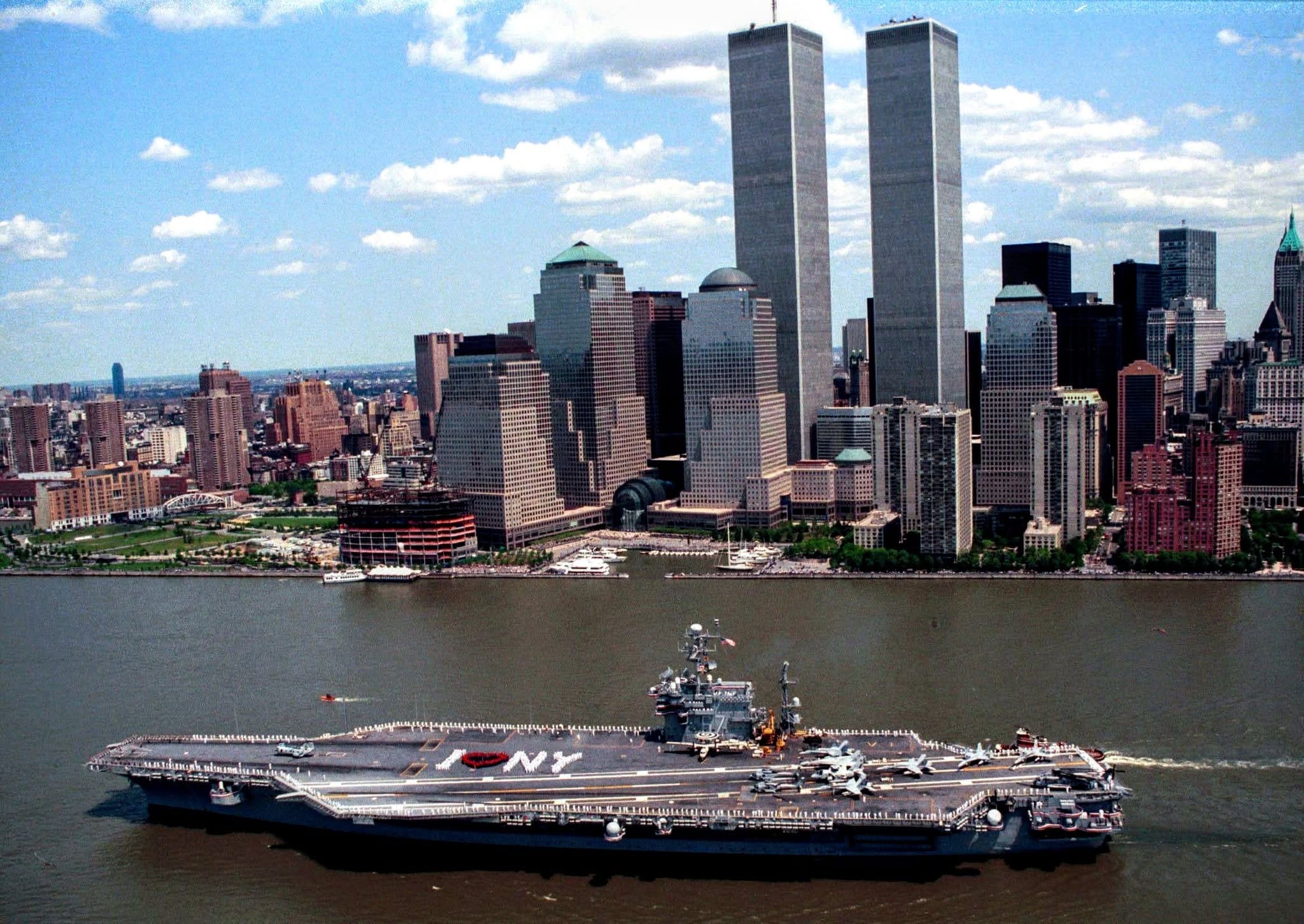
None of this makes public engagement dispensable: Recruitment matters, pride and patriotism properly understood, matters. Sailors notice when their service is honoured at a national event, and when it is absent while universities, businesses and public debate help form future decision-makers. Done modestly and honestly, this is worthwhile work.
But it should be done knowing what it is. Public relations aimed at the public can make a navy known. It cannot make seapower understood by the state, and the second is the one that determines whether the navy is funded, organised and used well. For a navy, the public come second.
Nor should educating government mean insulating naval preferences from challenge. An informed state must be able to scrutinise the service’s claims, compare alternatives and test whether proposed capabilities serve the purposes advanced for them. The object is a government capable of reasoning to choose to go to the sea and be a seapower, including questioning the advice offered in its name.
The harder work is however institutional. It means asking who in government is responsible for understanding the sea and the forces that protect national interests there. It means asking where that knowledge is preserved (coporate memory), who has the standing to put it in front of ministers, and who is paid, protected and invited to do it. It means a civilian capacity: scholars, officials and political leaders who can speak the language of the people who decide, in the way the Admiralty’s civilians once did. And it means taking seriously the education of the next generation of strategists in civilian universities, where the independence to challenge assumptions can still be found. A renamed headquarters or a larger communications budget would leave most of that untouched.
In conclusion, Navies have not failed at public relations because they are shy, or old-fashioned, or insufficiently attentive to hashtags. They have failed because the thing they are asked to do was never theirs to do or in the American case, one that required a measured response from its naval family of personnel, past and presnet. For centuries Britain’s understanding of the sea was a civilian responsibility, carried out by an institution designed for the task. When that institution was dismantled, the work was handed to a profession whose training, tenure and obligations were never built for it.
The Silent Service could afford its silence while someone else was speaking on its behalf. Without that someone, silence has been a key factor in its deconstruction.
That is the real question behind every new communications campaign. It is not how the Navy should talk about itself. It is who maintains the relationship between the state and seapower, and who is going to speak for the sea. Answering it in Britain means admitting how far the previous relationship has been dismantled. Invoking ‘seablindness’ and demanding better publicity only postpone that reckoning, one I suspect has come for the Royal Navy, and other navies are walking a tightrope over.
Further reading
James W. E. Smith, “The Seapower Charter of the Land Has Been Deconstructed”, (22 October 2026.
James W. E. Smith, “What is the ‘Art of Admiralty’?”
James W. E. Smith, “Seablindness’ and the Royal Navy Today”, 19 February 2024.
James W. E. Smith, “Why Navies Stop Being Heard”, 22 September, 2026.
James W. E. Smith, Deconstructing the Seapower State: Britain, America and Defence Unification, PhD thesis, King’s College London (2021).
Matthew Johnson, “The Liberal Party and the Navy League in Britain before the Great War”, Twentieth Century British History 22, no. 2 (2011), 137–163.
“No more parades? Navy Weeks, naval theatre and navalism, 1927–38”, Historical Research (2023).
US Navy Office of Community Outreach: Navy Weeks and American Connections and other outreach programmes.