The concept of ‘seablindness’ has long been used to describe societies that fail to educate themselves on their fundamental dependence on the sea for their security and prosperity. As the twenty-first century becomes increasingly reliant upon orbital infrastructure, communications and space-enabled military capability, a comparable condition is emerging. If maritime strategy has had to contend with ‘seablindness’, contemporary space strategy now faces its own form of strategic blindness. Dr James WE Smith draws on 20 years of research and elements of his work as the Laughton-Research Corbett Research Fellow.
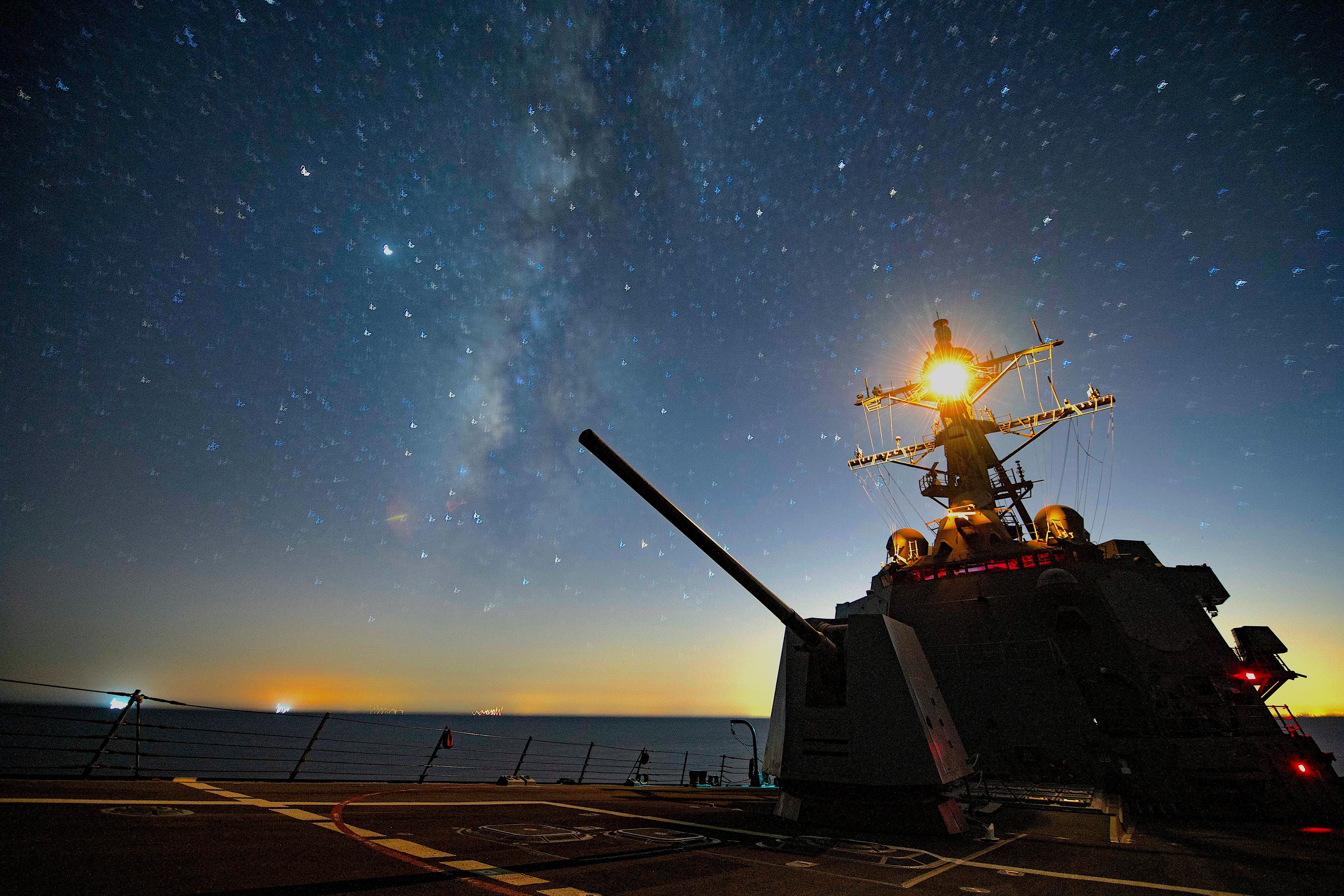
The concept of ‘seablindness’ has traditionally been associated with societies that actively choose or innocently overlook the significance of the maritime domain. Although prosperity, trade and national security depend upon the sea, maritime issues rarely occupy sustained public or political attention except during moments of crisis. The challenge for maritime thinkers and strategy has therefore never been simply to explain ships, fleets or naval operations, but to persuade governments and the public that the sea is a strategic environment upon which national power fundamentally depends.
Today, a remarkably similar challenge appears to be emerging in relation to space.
Contemporary societies rely upon satellites for communications, navigation, intelligence, finance, weather forecasting, disaster response and military operations to name some. Few aspects of contemporary life remain untouched by space-enabled infrastructure, yet public understanding of space strategy remains remarkably superficial. Political attention frequently oscillates between spectacular achievements—astronauts, rocket launches and ambitious exploration programmes, (NASA’s Artemis for example)—and discussions of individual military capabilities or threats to them which impact both space operations or military operations on Earth. Lost between these narratives is a deeper appreciation of space as a strategic environment. It’s a common growing strain, not just in space, but the pull of short-term thinking, budget management, and policy and doctrine being confused by decision-makers. This raises an important question. If ‘seablindness’ has long constrained maritime thinking in government, are we now witnessing the emergence of ‘spaceblindness’?
Building upon my earlier work formalising the concept of ‘seablindness’, this essay extends that framework by introducing the concept of ‘spaceblindness’ as a means of understanding comparable patterns emerging in relation to space.
‘Spaceblindness’ is the failure of states and societies to recognise, understand and prepare for the strategic significance of space despite becoming increasingly dependent upon it for their security, prosperity and national power let alone the future of civilisation.
‘Spaceblindness’ is not ignorance of rockets or satellites. Nor is ‘seablindness’ simply ignorance of ships or oceans. Both describe a failure to recognise the strategic significance of domains upon which societies increasingly depend and they are long term, permeant commitments. They are manifestations of a deeper problem: the inability of states and societies to perceive, understand and prepare for the strategic consequences of dependence on environments that remain largely invisible in everyday political and national life. The reality is they are ‘over the horizon’ and humans struggle to think in anything other than terrestrial terms, or simply put ‘land think’, which includes the transitory environment of the air.
Sea-Space Dependency
The similarities begin with dependence. Historically, maritime nations often took the sea for granted precisely because it became an accepted part of national life. Trade arrived in ports, naval forces protected distant interests and the homeland and maritime commerce underpinned prosperity, yet the mechanisms that made these outcomes possible remained largely invisible. Public attention tended to focus on naval battles during wartime, overlooking the continuous strategic function performed by maritime power in peacetime.
Space increasingly occupies a similar position. Satellites have become so deeply integrated into everyday life that they are almost invisible. Navigation systems, financial transactions, weather services, communications networks and military command systems depend upon orbital infrastructure, yet these dependencies rarely enter wider strategic debate. The very success of space systems has made them easy to ignore.
In both cases, invisibility breeds complacency. This is perhaps the defining characteristic of strategic blindness. Societies rarely devote sustained attention to those domains that function effectively. Instead, strategic awareness often arrives only after disruption. Maritime supply chains become visible when they fail or come under attack. Undersea cables receive attention after they are damaged. Satellite constellations become strategically important only when they are threatened. Yet Strategic shock frequently becomes the first lesson in strategic dependence.
Technological Revolutions: Warships and Spaceships
A second similarity concerns the tendency to confuse technology with strategy. Maritime history demonstrates that fleets alone do not constitute maritime strategy. Ships are instruments employed in pursuit of political objectives. Effective maritime strategy depends upon institutions, education, logistics, industrial capacity, commercial shipping, alliances, legal frameworks and coherent strategic thought. Throughout history, navies have succeeded not because they possessed impressive vessels, but because those vessels formed part of broader systems capable of sustaining national power.
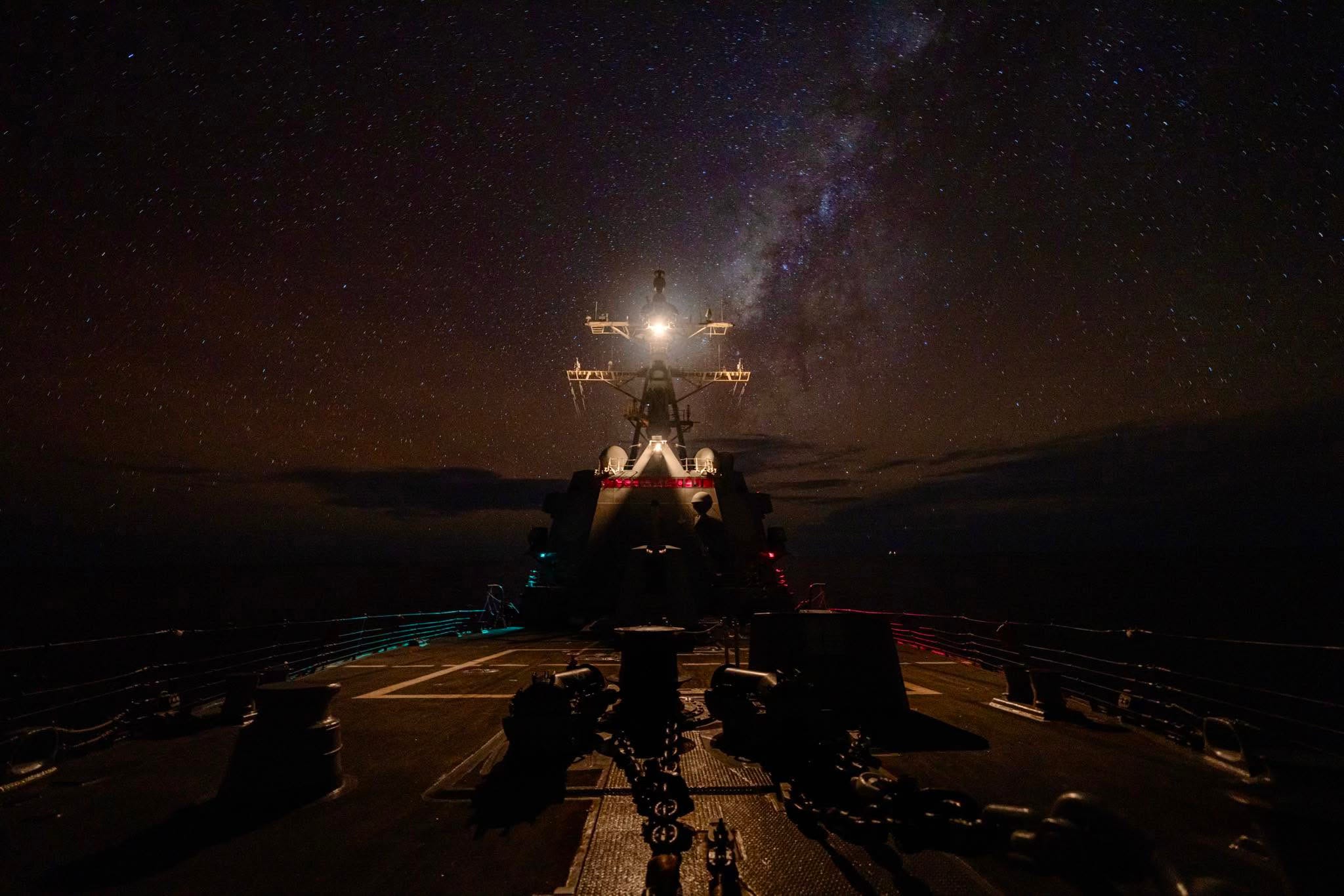
The same danger now exists in space, yet contemporary discussion frequently concentrates upon launch systems, anti-satellite weapons, commercial constellations and emerging technologies. These developments are undoubtedly important. But, technological capability alone does not constitute space strategy any more than aircraft carriers or submarines constitute maritime strategy. The critical questions concern how space capabilities support national objectives, how institutions organise them, how military and civilian expertise interact, and how governments translate technological potential into securing strategic advantage. Technology matters, but strategy gives all space technology purpose just as civilian and naval technology on the seas operate today.
Admiralty from Seabed to Space
A third similarity lies within institutions themselves. One of the enduring lessons of maritime history is that successful maritime powers cultivated institutions capable of thinking strategically over long periods. Admiralty, hydrographic offices, dockyards, merchant shipping, scientific organisations and professional education collectively sustained maritime capability across generations because they educated about a domain hostile and distant to day-to-day human life. Understanding of the sea and its impact upon life, emerged from those institutions
The same challenge confronts space today. Space is often discussed through the lens of innovation, air forces, and technological competition. Far less attention is devoted to developing the institutional foundations required to sustain strategic thought. Space forces, civil agencies, commercial providers, universities and governments all possess important roles, yet some of these institutions can either evolve, faster or slower, than the strategic ideas needed to guide them. The result is a growing imbalance between technological development and strategic understanding.
Perhaps the most important lesson offered by maritime history is that strategic cultures do not emerge automatically. Geography can only go so far to maritime awareness because seapower has always depended upon education, political leadership, institutional development and sustained public understanding. Without these, even maritime nations have repeatedly exhibited ‘seablindness’, the prime example is Britain in the 21st century. The same could prove likely to prove true for space even with the true space powers like the United States and those who seek to disrupt that dominance, such as China. Like the seas, space, is a long-term strategic game, one a nation will either execute on or be left out from, the victor being one that understood the best of maritime strategy and used it in space, bringing civilian and military power together.
Growing dependence upon orbital infrastructure or space technologies, which does make the news, will not automatically produce strategically space-minded societies. Space awareness cannot be assumed simply because satellites and space assets both civilian and military have become indispensable. It must be deliberately cultivated through education, professional military thought, institutional experience and informed public debate.
The comparison, however, should not be misunderstood. This is not an argument that space is simply another ocean, nor that maritime history provides the perfect blueprint for space operations, it is the best fit and far superior to any air power theory. Space remains a distinct strategic environment governed by different physical realities, technologies and legal frameworks, again maritime being the closest to draw experience from, then use theory which some propose. Yet, simple analogies obscure as much as they reveal but we can only draw from experience in other domains to guide it and until that experience gathers pace in space itself.
However: the key value of maritime history offers something unique. Maritime experience demonstrates how nations learned to understand environments that were simultaneously distant, unfamiliar and strategically indispensable. It illustrates how institutions evolved, how strategic cultures developed, how commercial and military interests became interconnected and how national power increasingly depended upon domains extending beyond territorial boundaries.
Seen in this way, ‘seablindness’ and ‘spaceblindness’ are not simply analogous concepts. They are recurring manifestations of a broader strategic phenomenon. States repeatedly fail to recognise the significance of domains that quietly sustain their security and prosperity until crises expose those dependencies, only for them to be quickly forgotten again when the news cycle moves on. Strategic blindness therefore emerges not from ignorance of technology, but from deficiencies in strategic culture, institutional development and failure of education in politics and to decision-makers from policy, to doctrine, to business and beyond.
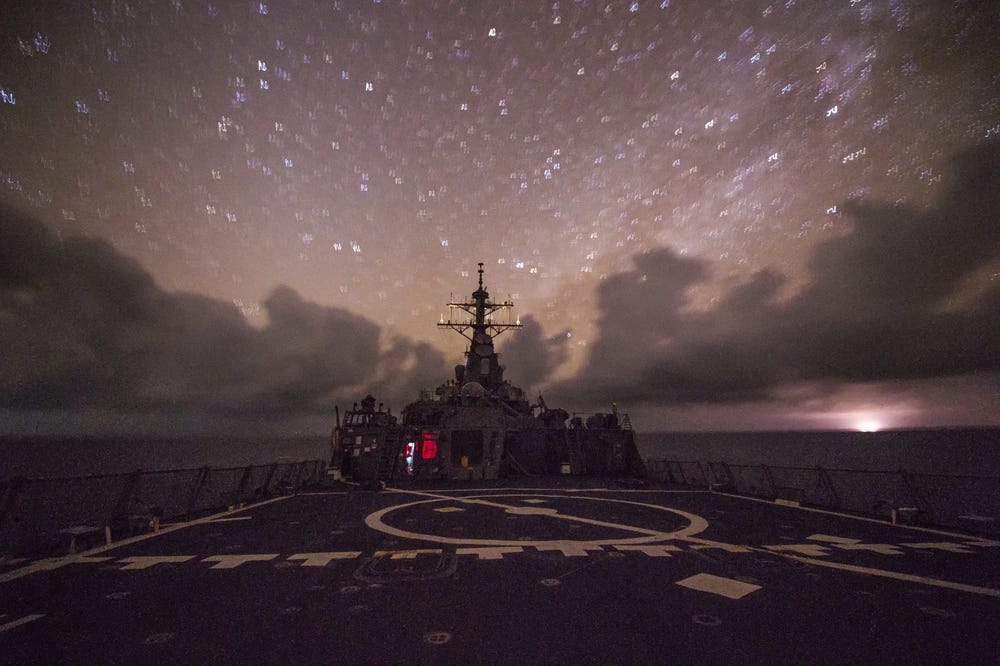
If maritime and naval history offers one enduring lesson to contemporary space strategy, it is this: strategic dependence must be understood before strategic crisis forces that understanding upon us. The challenge for the twenty-first century is therefore not merely to build better satellites, launch more spacecraft or establish new military organisations in orbit. It is to cultivate the strategic understanding, institutional maturity and intellectual foundations necessary to ensure that growing dependence upon space is matched by an equally sophisticated appreciation of its place within national strategy. One that must be seabed to space.
The danger is not that progress in space will stall, it is that nations arrive there still strategically blind when they reality is, they need not.
This article originally featured on the King’s College London website on 28 July 2026. https://www.kcl.ac.uk/from-seablindness-to-spaceblindness
(C) Dr James W.E. Smith, 2026.