
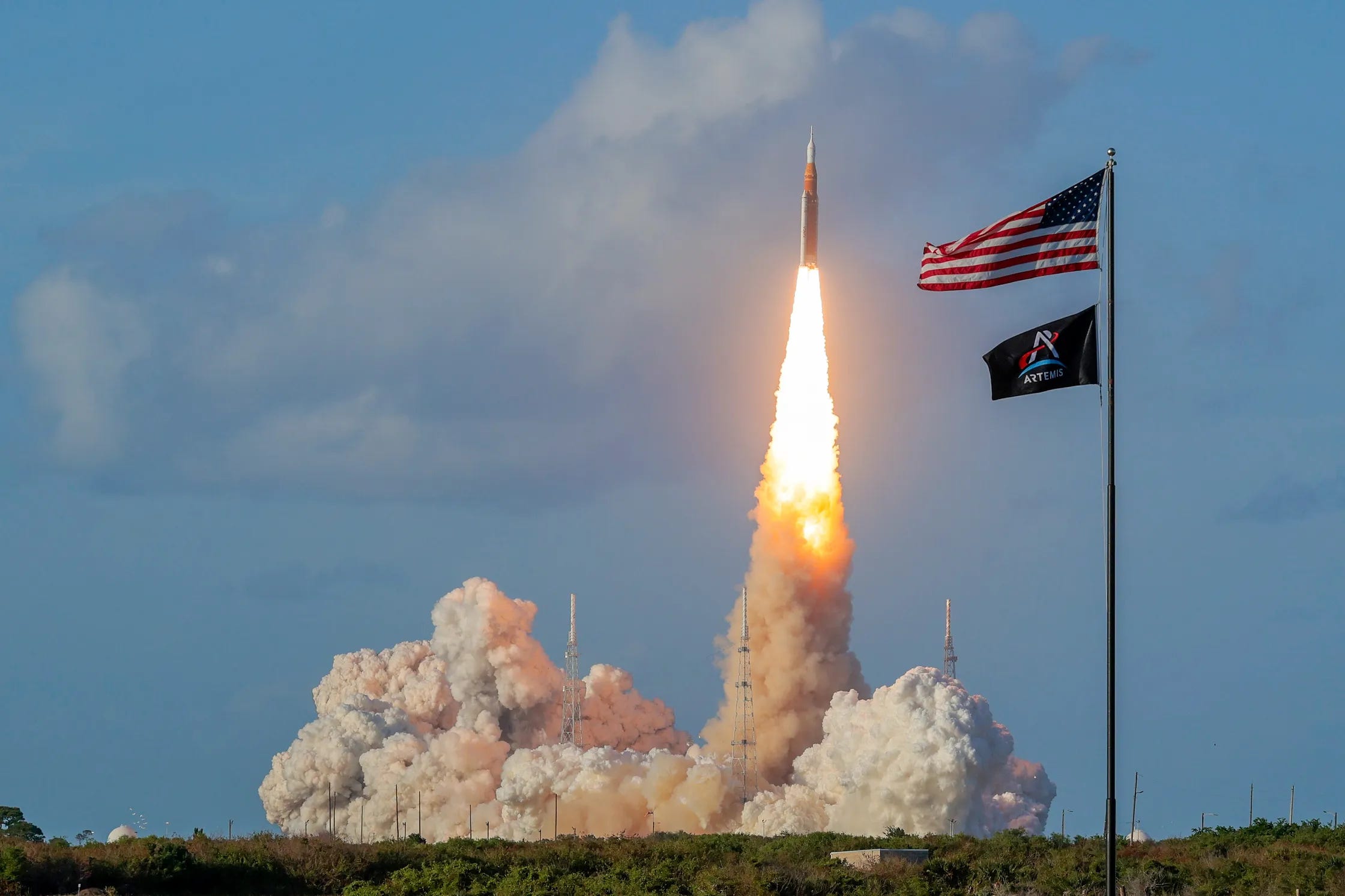
There will always be those who ask why we go. Why return to the Moon when there are problems on Earth? Why spend the money? Why accept the danger? Why persist when technologies fail, schedules slip and exploration proves more difficult than what is promised on paper, social media and Congressional statements?
History suggests that these are often the wrong questions.
The people who complain about the risks and expense of Artemis are the anti-intellectual descendants of those who would never have boarded a wooden ship to cross an unknown ocean, but whose societies subsequently prospered because others did. They would not have climbed into the fragile machines of the first aviators, yet today think nothing of boarding an aircraft and crossing a continent in hours. They would have questioned technologies whose consequences could not possibly have been predicted, yet now live lives shaped by precisely that process of experimentation: modern medicine, communications, computing, entertainment, global transportation, weather forecasting and satellite navigation to name a few.
Civilisation has always contained a strange contradiction. We are suspicious of the cost and danger involved in creating the future, yet remarkably quick to regard the benefits of that future as necessities once somebody else has created it.
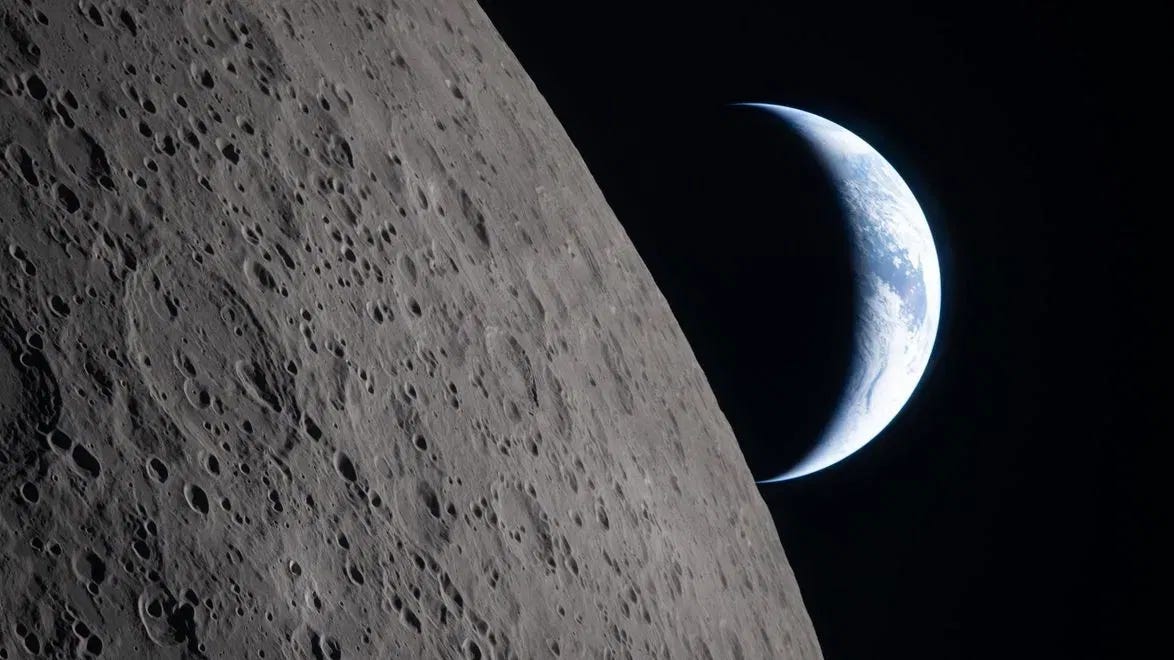
This is why Artemis IV – the next moon landing matters.
We only have to look to the seas for guidance. Humanity does not naturally belong at sea. For most of our history, the oceans were deemed too hostile environments, let alone the reality that we could neither breathe nor permanently survive. Humanity, nevertheless chose to go, develop skill, to learn to sail and build great machines to go faster and further. Ships were developed, navigation, preserved food, medicine and communications, and eventually new forms of propulsion amongst other things. Tentative journeys became exploration; exploration encouraged science and commerce; commerce produced infrastructure and networks; those networks became highways of communication between societies; and eventually the oceans became an indispensable commons for human civilisation for both defence and civilian activity.
This is why maritime affairs must be understood as something considerably greater than navies or warfare — a point I have made at length elsewhere. The subject encompasses the broad spectrum and interrelationship of politics, economics, science, technology, exploration, industry, trade, foreign relations, communications, law and culture. Naval power is part of the maritime world, but it is not the whole of it.
Space is no different in principle, however different it may be in physical character. It is another hostile environment in which human beings cannot naturally survive. We must choose to go there. We must build the machines that carry us, learn to navigate across it, sustain human life while travelling through it, communicate across enormous distances and construct the infrastructure that eventually permits us not merely to visit, but to remain.
And just as maritime history was never simply the history of warships, the history and future of humanity in space cannot be reduced to rockets, astronauts or military satellites, air forces or the dogmatic views of air power theorists. Science, exploration, commerce, technology, politics and strategy are intertwined. This is a case I have made previously in examining the foundations of future space strategy: the civilian and military histories of space cannot be neatly disconnected, and thinking about the strategic implications of humanity reaching beyond the atmosphere began before what we have come to call the Space Age. By 1945, before Sputnik and before Apollo, the British Admiralty and U.S. Department of the Navy was already considering rockets, operations reaching into space and the possibility that international interests would eventually emerge there.
That historical perspective matters because judging Artemis IV according to whether it produces an immediate economic return fundamentally misunderstands exploration. The sailors who crossed the Atlantic could not have produced a spreadsheet demonstrating the global economy that would eventually depend upon oceanic communications. Nor could the pioneers of steam propulsion have foreseen every transformation in commerce, transportation and naval power their technology would enable, any more than the first aviators could have explained modern mass tourism, overnight freight networks or an aviation industry connecting almost every major city on Earth. The early developers of computing, communications, the internet and satellite technologies were no different — none of them could have completely anticipated how deeply their inventions would become embedded in everyday life. Many which we take for granted.
Transformative technologies create possibilities before societies discover everything they will eventually do with them.
Nor should we imagine that progress follows a neat upward line. Ships sank. Expeditions disappeared. Aircraft crashed. Rockets exploded. Technologies failed. The cost in human life was painful but lessons were learned and insight from experience (for that is all we have) was gained. Subsequently, designs, plans, doctrine, and knowledge accumulated. What was experimental became reliable; what was exceptional became routine; and what had once appeared unnecessary became something societies could scarcely imagine living without.
So, when I say Artemis IV must not fail, I do not mean that every component of the mission must work perfectly. A spacecraft can fail and launches can be delayed let alone a programme can encounter technical problems. Exploration has always involved setbacks precisely because it involves attempting things humanity has not yet learned to do routinely. The failure we cannot afford is a failure of will, something we should know, the public should be educated about, from seabed through to space over multiple millennia’s.
What we should be much more concerned about is losing the political, cultural and strategic determination to continue than about encountering technical setbacks while doing so. The words of some journalists or those who ironically take for granted that their free speech to criticise is today using technologies and an entire civilisations built on those people who took risks through civilian enterprise or defence of nation. History matters here because experience provides a foundation upon which we can think about unfamiliar strategic problems. Humanity’s future in space should not be approached as though every problem beyond Earth has suddenly appeared without precedent — a point that follows directly from my earlier work on this subject. We possess thousands of years of human experience in confronting hostile environments, expanding communications, developing technologies, creating commercial networks and building institutions to govern them, like Admiralty. The maritime experience is especially valuable precisely because humanity had to learn how to operate for sustained periods within an environment in which human beings could not naturally live.
The process is more important than any individual destination: exploration leads to greater scientific knowledge; science and necessity stimulate technology; technology enables communications and commerce; commerce demands infrastructure; infrastructure permits sustained presence; and sustained presence eventually makes settlement possible.
We should therefore be careful about describing Artemis simply as another “race” to the Moon. A race has a finish line. Becoming spacefaring does not. This matches maritime history closely.
NASA’s 1960s Apollo programme demonstrated that human beings could reach another world and return. The challenge facing this century is different. It is to begin turning extraordinary voyages into sustained activity: learning how to travel further and more reliably, how to operate for longer periods away from Earth, how to build infrastructure, how to sustain people, and eventually how to create the scientific, commercial, political and strategic systems that will accompany permanent human activity beyond our planet.
There is also a still larger reason why this matters. For all the legitimate arguments about budgets, national priorities and the speed at which we should proceed, there is ultimately no permanent choice between remaining an entirely Earthbound civilisation and becoming a spacefaring one, no different to how island nations had no choice but to be maritime and continental land masses realised they needed dominance at sea through civilian or military presence to have influence in the world around them.
Earth is our home, and we should protect it and address it issues but they can not consume us to the point we give up on space, we must be mindful it is not a permeant home.
The timescales are almost incomprehensibly long, and the eventual evolution of the Sun is obviously not an argument for the budget of one lunar mission today. But the underlying civilisational reality should give us some humility about the scale on which we think. Neither our planet nor our star will exist in its present condition forever. If human civilisation aspires to a future measured not simply in decades or centuries but in geological and ultimately astronomical time, then at some point humanity has no alternative but to learn how to live beyond the world on which it evolved.
That process will not begin with some magnificent starship suddenly departing Earth centuries from now. It begins through accumulated knowledge: one voyage followed by another; technologies tested and improved; infrastructure constructed; mistakes made and understood; people learning how to live and work further from Earth for longer periods.
There is something deeply familiar about that process.
We once learned to leave the shore. We learned to navigate beyond sight of land, to survive long voyages, to cross oceans, to establish distant communications and commercial networks, and ultimately to construct a civilisation whose prosperity and security became inseparable from the maritime world. The oceans ceased simply to be barriers at the edge of human existence and became great connecting spaces through which civilisation itself operated.
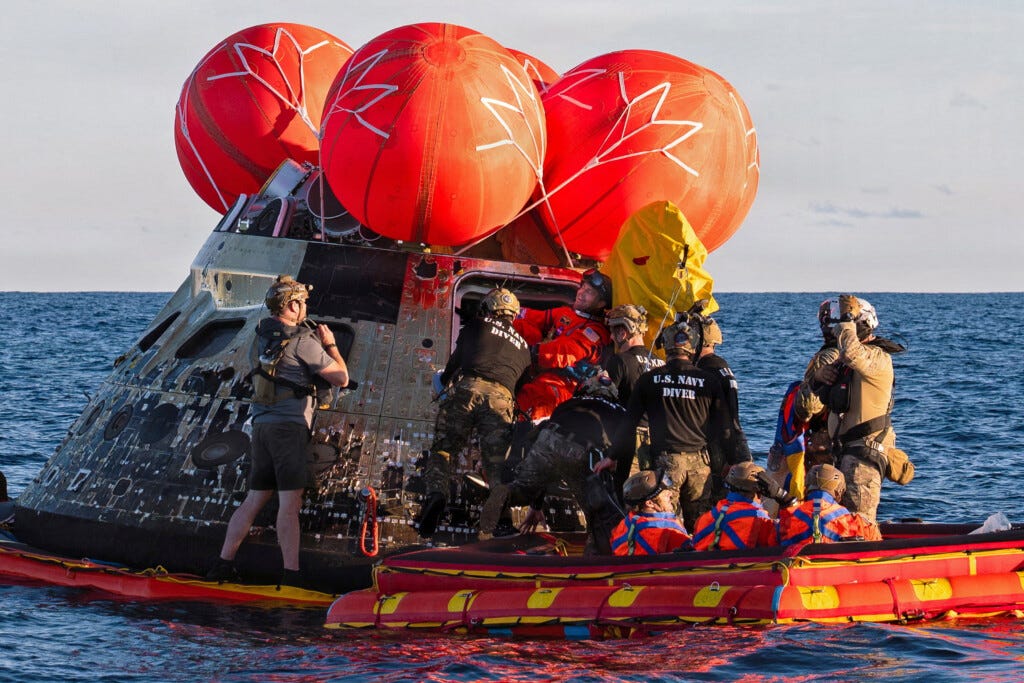
Space may represent the next great expression of that same human impulse.
The ultimate significance of Artemis is therefore not simply the Moon. Nor is it another twenty-first-century “space race”. It is another tentative step in a process humanity has undertaken before: learning to cross an environment that does not naturally sustain us, then learning to work within it, navigate it, communicate across it, trade through it and, eventually, live beyond the shores from which we departed.
We became a maritime civilisation because geography, necessity, ambition and human curiosity drew us across the oceans. In the very long run, astronomy gives us an even less negotiable imperative. Human civilisation has no permanent future confined to Earth. It must eventually become a spacefaring civilisation — and I would argue that, in character, organisation and strategic outlook, it will become an increasingly maritime spacefaring civilisation.
That future will not be created by Artemis IV alone. But neither will it be created without generations willing to take steps like it.
Artemis IV must not fail because going back to the Moon is not really the point. Learning how to keep going is.