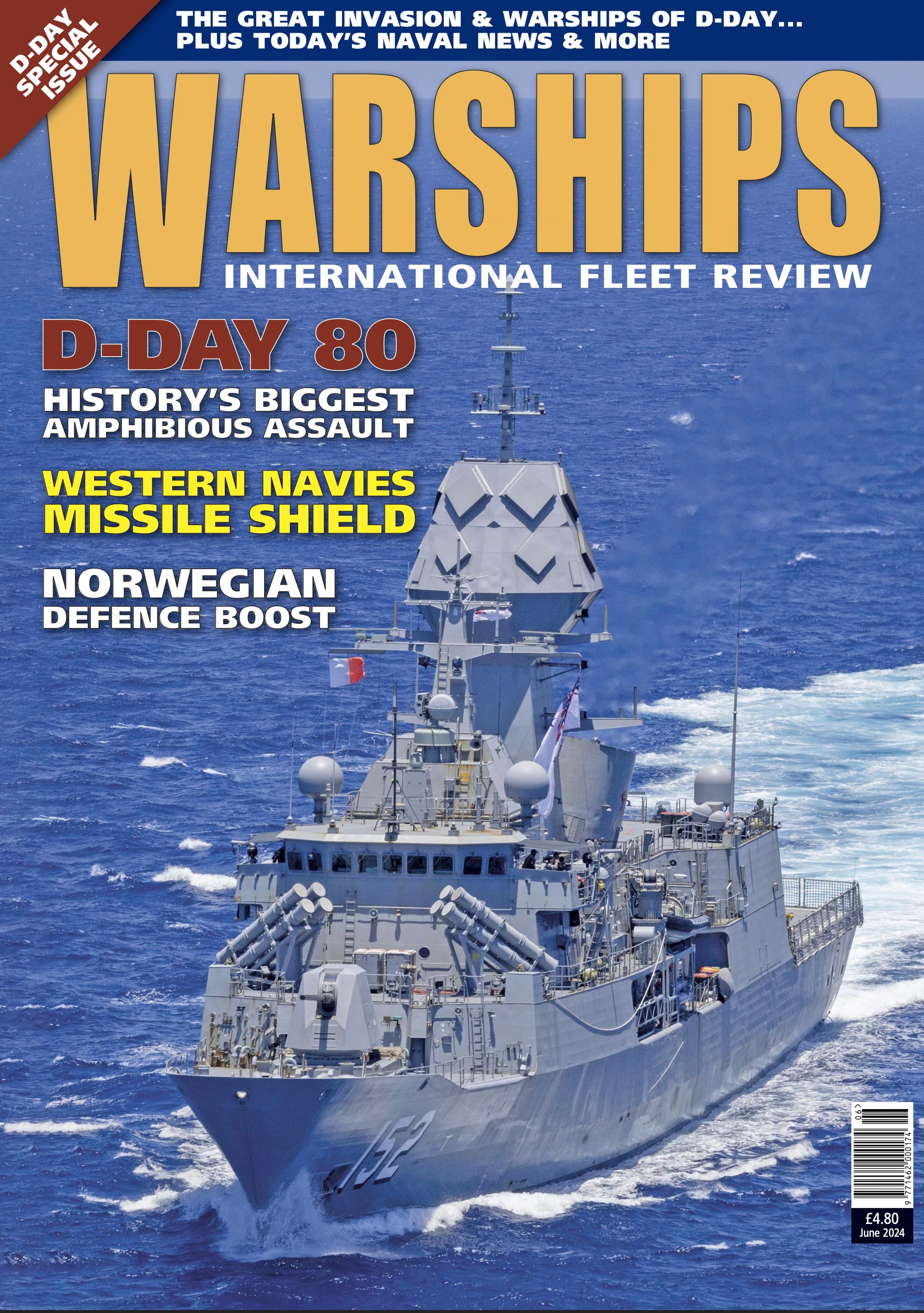
In the June 2024 edition of Warships International Fleet Review, (on sale in e-version and print in the UK & abroad 17 May 2024) . The editor remarks:
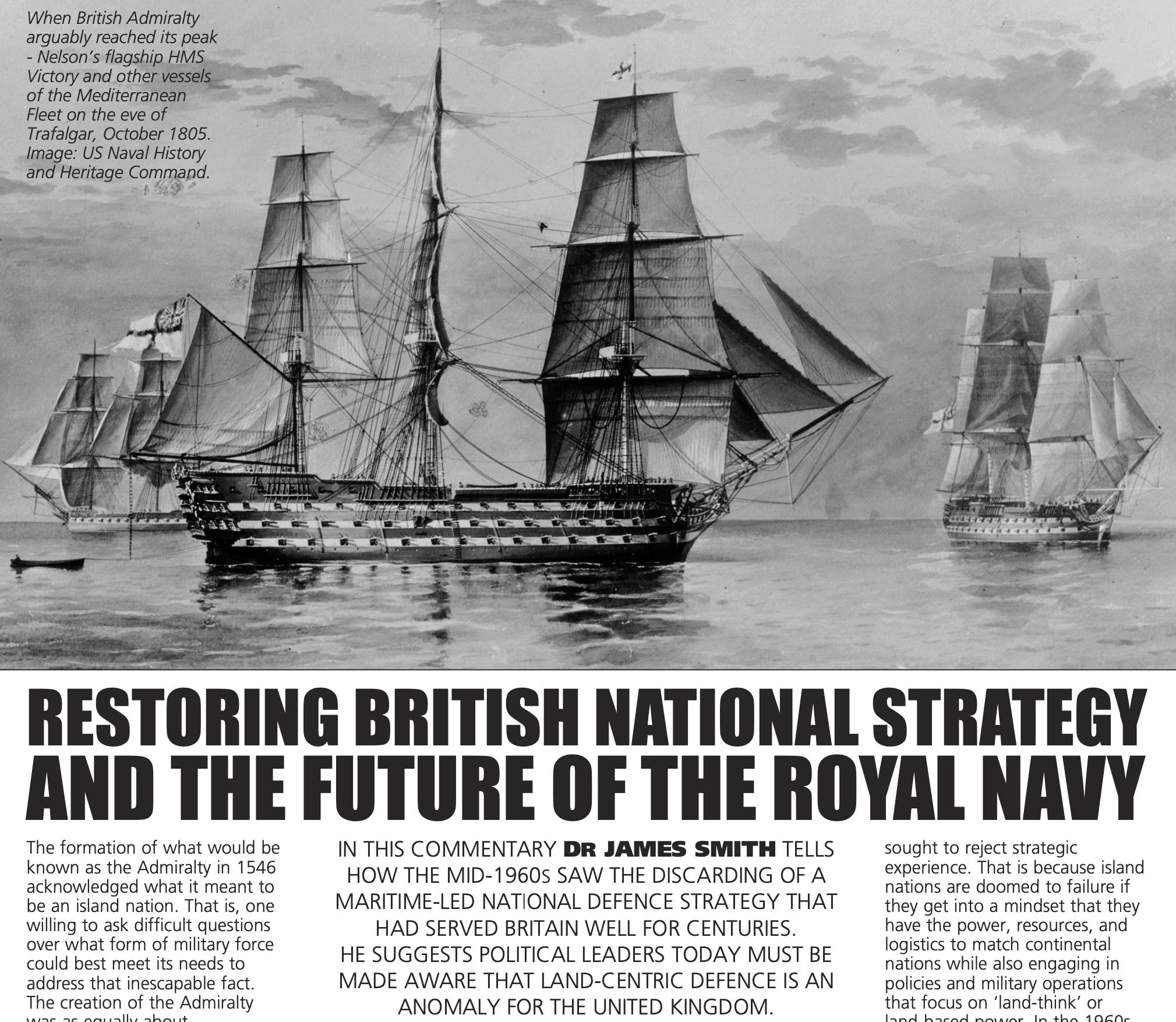
In his commentary Dr James Smith tells how the mid-1960s saw the discarding of a maritime-led national defence strategy that had served Britain well for centuries. He suggests political leaders today must be made that land-centric defence is an anomaly for the United Kingdom.
The full article is available in print and e-print. The publishers website is:
https://warshipsifr.com/
Please support physical print where and when you can.
RESTORING BRITISH NATIONAL STRATEGY AND THE FUTURE OF THE ROYAL NAVY
The formation of what would be known as the Admiralty in 1546 acknowledged what it meant to be an island nation. That is, one willing to ask difficult questions over what form of military force could best meet its needs to address that inescapable fact. The creation of the Admiralty was as equally about administrating the naval service as it was about creating a system to educate the nation, and its political leadership, on the fact that no other choice existed for national defence.
For it rested on geographic facts, not the agendas of those who tinkered endlessly with foreign policy objectives or sought the ‘glory’ of land battles.
To this day the sea remains Britain’s strength and greatest vulnerability, hence the purposeful act of developing skilled and trained sailors in a professional navy to address this reality.
In the centuries following the Admiralty’s creation Britain developed a bespoke ‘way of war and peace’. This strategy, a maritime one, focused on how to use limited resources to defend the island nation and meet foreign policy objectives in times of war and peace.
In short, maritime strategy was the best way to use the few resources Britain had most effectively and efficiently it could. This was because Britain could be easily defeated on land against other powers – those which called continents their home – and it was the experience of seapower, the close collaboration of navy and army and the ability to influence events on land from the sea, that built British strategy.
Experience, not guesswork, assumptions or theory, developed this strategy, and led to one of the world’s best fighting forces, namely the Royal Navy. It was not a matter of whether Britain could depend on a maritime-led strategy, but that it had no other choice.
The evidence speaks for itself, although today, at our peril, the study of history is not so popular. Those who do not want to engage with the past ignore the reality that seapower was first and foremost a reaction to the strategic priority of protecting Britain, securing its logistic chain, and maintaining global connections.
This fact was in place long before the British Empire emerged. Nor did the land affairs of Europeans ever dominate it. Britain had to rely on the asymmetric advantage of sea control, and the ability to influence events on land from the sea, to contain and help defeat continental military hegemons, from Philip II and Napoleon to Hitler. The Battle of Trafalgar in 1805 and the Battle of Atlantic 1939-1945 were the foundations for grand alliances that restored order.
Although today, the past is often looked upon with scorn and suspicion, the organisation of defence from the 1500s through to the mid 20th Century understood that educating decision-makers was as a task as central to the success of Britain’s armed forces as actions of the professionals who served in them.
Humans are land-dwellers and the business of a navy is over the horizon, far from the gaze of the public and politicians alike. Therefore, the problem of understanding British national defence strategy has always loomed large among the population at large.
In past times the Admiralty actively countered silly, ill-thought-through ideas that sought to reject strategic experience. That is because island nations are doomed to failure if they get into a mindset that they have the power, resources, and logistics to match continental nations while also engaging in policies and military operations that focus on ‘land-think’ or land-based power.
In the 1960s Britain chose to be bargain basement land-power, which actually aided its decline as a power in Europe and globally.
After 1964, its defence organisation reflected land-centric ideas that increasingly cared less about understanding the sea, the global nature of logistics and national security, and thus seapower. It shunted the navy into a niche role, one that often reflected quaint ideas of sea battles and towards something more sentimental, frequently based on fictitious interpretations of a navy that never existed, bar in the minds of those hostile to the Naval Service.
Since the 1960s, terms increasingly associated with the Royal Navy have involved the use of words such as ‘fall’, ‘decline’, and ‘sea blindness.’
A maritime-centric strategy that served Britain well in the past was gradually eliminated in the 20th Century, particularly after 1964. For that was the year the Admiralty was abolished and, along with Air Ministry, was absorbed into a new tri-service organisation called the Ministry of Defence (MoD).
The growing usage of negativity in the British defence lexicon of the later 20th and early 21st centuries across defence debate, national culture, and Britain’s role in the world and, in particular, the Royal Navy acknowledged a problem exists. Still, few understood the change that had occurred, and government Cabinets were no longer educated to question past decisions on defence. Even with debate there was a continual failure to grasp the scale of the problem because it was about the fundamental rejection of the British strategic experience with maritime strategy and the Royal Navy at its core.
The fundamental rejection in the 1960s of maritime strategy as central to national strategy was also a rejection of history and British national inheritance. An inheritance where the connection to the sea led to an understanding of national realities, which informed how Britain waged war and peace. This understanding, which had grown in successive generations of those who called the British Isles their home, and those who led them, saw that strategy purposefully replaced with an operational national doctrine focused on tactical land and land-based air power concepts. By replacing national strategic experience with a continental commitment - one about northern Europe and part of the North Atlantic - it destroyed the ability to understand how national strategy had been developed in previous eras, in order to address national defence and maximise national resources in the interests of the British people at home and abroad.
The process and organisation the UK Government uses for defence strategy today is not designed to challenge the status quo that emerged after 1964.
In recent decades British defence strategy has been dominated by land wars, ending in questionable outcomes. A land-centric system of national defence was something the Admiralty and a few others fiercely fought against from 1955-1964.
Instead, the foundations of modern UK defence were built on a set strategic model continental in origin and focus, utterly alien to prior British experience. It is one that discourages the discussion of national policy and strategy, making the task of decision-making easier for politicians. Missing to this day is Britain’s mechanism, along with methods to educate Whitehall towards formulating an all-service participation in a coherent national strategy.
That is, one that can meet emerging and standing defence and foreign policy objectives alike by developing the successful strategy Britain has used historically, one focussed on the maritime domain, one which in times past secured the nation and its vital interests.
The common belief that the objective of superior British strategy was secured by the abolition of the free-standing service ministries, such as the Admiralty, with the creation of the Ministry of Defence has little factual basis.
It was a misguided aspiration that set defence on a path that can be recognised today, where countless reviews of defence and security demonstrate the appetite for a national strategy from government, military and elsewhere, has failed to produce a proper national answer.
Britain once knew how to execute a national defence strategy but the approach of the past 60 years has failed. The affliction of today goes far beyond just asking for a bigger navy, or thinking that successful wielding of seapower is a simple equation of naval answers to global naval problems. Many of the issues that dominate that debate, from finance to personnel to equipment, stem from the turmoil of abandoning the aforementioned strategic experience.
Navies have never been more capable, influencing from the seabed to space but consistent effort is needed in educating a nation’s political leadership that seapower provides the best option for defence. This is better than remaining stuck in the dead-end arguments of those who have, since 1945, seen the world as a matter of regional skirmishes.
Regardless of technological change or world affairs, the future of the Royal Navy rests on the education of decision-makers about how Britain successfully developed and executed a maritime-centric strategy that served it well in its past. For many of its principles remain as true today as they were in the past.