

A country can educate its naval officers and still leave much of its political and military leadership poorly equipped to think about the sea, to think ‘maritime’ and what this means in practice. Professional expertise within a navy does not automatically become understanding in government, business or public life. The people who attempt to shape national priorities, allocate resources, organise trade and explain events to the public require an education of their own. If maritime understanding is to inform national strategy, it must reach the places where those responsibilities are exercised.
This is an educational problem with institutional consequences. Who introduces a future civil servants or federal employees to the relationship between maritime power and political purpose? Where does a student entering business encounter the history of the systems through which goods, capital and influence move? Who helps a future journalist distinguish the possession of warships from the purposes they serve? These questions concern the intellectual foundations of society where maritime cannot be ignored. But what is fact, is that they cannot be answered solely through the education of its armed forces.
Civilian universities have a particular responsibility here. Their students will enter professions that collectively shape the state’s capacity to understand its interests and act upon them. Naval history offers students a way to examine how commerce, diplomacy, finance, geography and force interact. Sustaining that education requires scholarly communities with the expertise, continuity and independence, veterans, practitioners and scholars to make the subject accessible without reducing it to institutional advocacy.
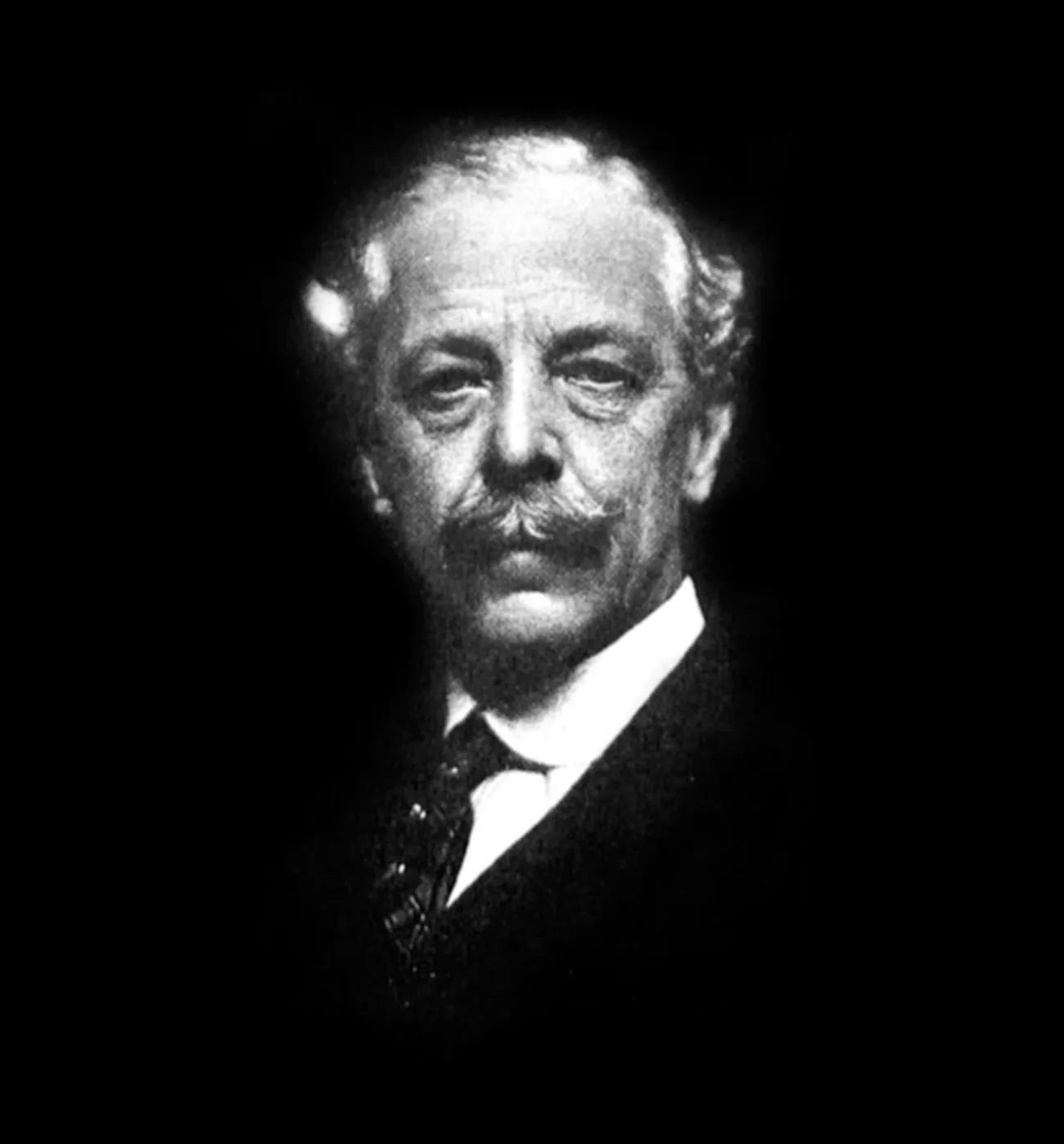
The Historical Foundations
The relationship between naval history and strategic education was central to the work of John Knox Laughton (1830-1915). A Royal Naval instructor who became Professor of Modern History at King’s College London in 1885, Laughton helped establish naval history as a discipline grounded in the critical examination of documentary evidence, to some degree he is the modern father of military history and war studies, long before former army officers could claim the title. His participation in the foundation of the Navy Records Society in 1893 supported that undertaking by making historical sources available for systematic study.
Laughton’s historical work developed amid rapid technological change. Steam propulsion, armour and new weapons encouraged a new wave of technological false prophets to have belief that earlier experience had ceased to matter. These same types of prophets exist today, growing in number after 1945 with the various new weapons and ideas for the military have come along. Think: strategic air power, nuclear weapons, stealth, cyber, drones, RMA, hybrid navies and so on. Yet, the introduction of new equipment did not remove the need to judge how it should be employed, what purposes it could serve or how an opponent might respond. Those questions required an understanding of war (the art of war and peace) broader than technical proficiency. Historical study provided experience beyond the limits of an individual’s career, including failures that peacetime confidence could otherwise conceal. The enduring educational task is to distinguish what technological change has altered from the problems of judgement it leaves unresolved.
The significance of his work extended beyond improving accounts of battles. Understanding why decisions had been taken, what information had been available and how naval action related to political objectives required historical analysis. A record of victories could celebrate professional achievement but more important, an education in history could examine the assumptions behind that achievement, the circumstances that made it possible and the limits of its relevance to another situation. In short, experience was all there was to study, because theory and guesswork, even assumption was equally dangerous to the military as enemy action was.
Laughton’s work connected professional naval education with the emerging standards of academic history. That relationship placed obligations on both: historical inquiry needed sufficient knowledge of naval affairs to ask informed questions while the naval profession needed to accept that serious scholarship might revise familiar interpretations. The relationship contains a productive tension that still persists today. Academic inquiry continually seeks better answers and, more fundamentally, better questions. Armed forces need a sufficiently settled understanding of the past to support professional education. The task is to keep that understanding open to correction as scholarship develops. The tension is that the military often want static clear answers when the study of humans (humanities) at war, spanning strategy, doctrine, tactics, operations and more is greyer than that.
This remains a foundation for thinking strategically. History teaches students to reconstruct choices within their circumstances, distinguish intentions from outcomes and recognise alternatives obscured by hindsight. It also makes institutions themselves available for examination. The arrangements through which a state exercises power become historical choices whose purposes and consequences can be investigated.
Corbett and the Education of Strategic Judgement
Sir Julian Corbett (1854-1922) developed this relationship between historical inquiry and strategic thought. His writing examined the use of maritime power within a wider political conception of war. Political direction, economic pressure, limited objectives and cooperation between the services belonged within the same inquiry. The fleet’s activities acquired meaning through their relationship with national purposes.
Corbett’s approach explains the practical value of historical study for strategy, policy and defence. He is to some degree, Corbett was a true philosopher of strategy by examining how political purposes, economic circumstances and military action interacted, he developed a framework within which strategic choices could be understood and debated. Policymakers, defence officials and military professionals can use that approach to test assumptions about objectives, resources and the consequences of employing force. Its value depends on critical inquiry: establishing why a course of action worked in particular circumstances, and judging whether those circumstances bear comparison with the present. Selecting an attractive precedent to justify a preferred policy reverses that process. History should expose a proposition to examination, including evidence that might overturn it. Again, evidence, not theory is paramount and why the study of strategy cannot be grounded in the contemporary ‘fields’ of so called ‘international relations’ or ‘political science’.
Corbett’s position on the roles of civilian universities developed through experience. As late as 1910, he doubted whether a university could sustain the subject in the way the Admiralty could. After all, true Admiralty is about educating the state to strategy, not merely an operational command post. By 1916, he had taken up Laughton’s proposal for a university department of naval history, capable of training researchers and opening the accumulated experience of the service to more systematic examination. He lectured at King’s, including within its history teaching, and returned to the departmental proposal in his 1922 Creighton Lecture. This development matters: the case for a university forum emerged from close engagement with professional naval education and the difficulties of sustaining historical inquiry within it. In short, what we know as ‘private military education’ or to use Corbett’s words from his own treatment by some naval officers ‘the whims of naval officers seeing their own glory over that to a higher cause.’
The difference between what an officer and a civilian need to know is consequential. An officer may need to understand how naval operations contribute to a political objective. A civilian decision-maker must also judge the objective, its costs, the available alternatives and the relationship between military action and other instruments of policy. Both require strategic understanding. Their different responsibilities make the education of one an insufficient substitute for the education of the other.
Corbett’s experience also reveals the difficulty of sustaining critical scholarship in close proximity to institutional power. Professor Andrew Lambert’s research on Corbett’s account of the Battle of Jutland (1916) documents the pressure to alter the official history to meet the demands of Admiral David Beatty (1871-1936) and officers associated with his battlecruiser command. The Admiralty ultimately prefaced the published volume with a disclaimer distancing itself from its conclusions. The dispute concerned the interpretation of a battle, but it also exposed the vulnerability of historical judgement when it challenged influential professional reputations, let alone future planning. All of it could undermine government understanding and support for seapower. Exactly what Corbett wanted to avoid.
That episode should not obscure Corbett’s productive relationships with naval officers. Those relationships made much of his work possible. It does, however, demonstrate why historical authority cannot rest entirely with the institution whose conduct is being studied. The value of scholarship depends partly on its ability to reach conclusions that its professional audience finds uncomfortable. Corbett’s significance is thus twofold, first his conception of strategy required an understanding broader than the internal concerns of a service and second, his experience demonstrates the importance of forums in which the resulting arguments can be examined without official approval determining their legitimacy.

The Civilian University’s Mission
Professional military education (PME) has an essential responsibility to prepare officers for demanding professional and strategic duties. The value on this is different between military services and has support of it has changed over decades from within them towards it. Civilian academics contribute substantially to that work. But the presence of academic expertise within military education does not discharge the university’s wider educational responsibility. A society requires opportunities to study maritime questions outside a curriculum organised principally around service needs.
The distinction between training and education is essential here. Preparing officers to undertake known tasks cannot exhaust the preparation required for uncertain responsibilities. Education develops the capacity to examine unfamiliar situations, question assumptions and exercise judgement. Rigorous historical scholarship and cooperation with academics support that professional development. The civilian university can contribute directly to service education while maintaining a purpose that extends beyond immediate professional requirements.
The institutional setting of professional military education nevertheless matters. My research on defence organisation in Britain and the United States has examined how the organisation of a defence establishment shapes the way it thinks: something vital to understanding the future of strategy. Unification brought professional military education within the single department it serves, and a curriculum set there tends to be shaped around that department’s agenda: its established responsibilities, organisational assumptions and requirements to prepare personnel for particular duties. These give education a necessary purpose, but can also narrow the questions a curriculum permits itself to ask. The aim shifts from developing officers of the highest intellectual calibre to producing officers fluent in the prevailing conception of defence, a framework they learn to apply without sufficient opportunity to examine its historical origins or strategic limitations. The modern overbearing emphasis on ‘jointness’ is one of the examples of this, that sometimes neuters being able to have true debates. Where critical scrutiny weakens, inherited interpretations can harden into accepted truths, and a curriculum can reproduce assumptions whose evidential foundations or contemporary relevance deserve reconsideration. Civilian departments provide a forum in which scholars, students and practitioners can examine those assumptions without departmental requirements determining the boundaries of inquiry. This is an institutional risk to guard against, rather than a judgement on the quality or independence of military educators.
But concentrating the study of naval history, military history and strategy solely in professional military education is not the answer. PME is an excellent home for these subjects, but it comes with pitfalls. Everything taught there must ultimately pass the test of what PME is for, and that is a different question from the one asked here. The field must be advanced where inquiry is free to follow the evidence, and its findings must then flow into the PME curriculum without hindrance. Meanwhile, the field has come apart: its expertise is now dispersed and disconnected. The state of naval history and maritime strategy can be understood in the mirror of the condition of British seapower itself: in free fall, if not already deconstructed.
Where professional military education comes to treat independent civilian scholarship as a competitor rather than a source, it undermines the very work on which it depends. By the end of the twentieth century, British academics had become embroiled in debates over the methodology, meaning and practice of naval power, seapower, maritime strategy, and the future Royal Navy. Two schools rose to prominence: the "navalism and naval power" school led by Professor Geoffrey Till, closely associated with professional military education, and the method of Professor Andrew Lambert, which continued the Corbettian tradition of applied history and the philosophy of maritime strategy. Both have something to offer but the impact of this division went far beyond England considering the vast alumni and interactions both have had. Without a shared forum in which to test their differences, however, the ordinary divisions of academic life harden, and rival schools talk past one another rather than sharpen each other.
Because maritime thinking and the study of naval affairs and history is central to strategic thought, its decline does more than weaken that thought. It creates an imbalance. A useful example, others can be found around the world, particularly for navies and marines, is the example of the Royal Navy's relationship with academia, which is strikingly weak. This example, set beside the ties the other services maintain with think tanks, academia and research groups, it is an embarrassment which says a lot more then meets the eye: within a unified defence department, that matters even more. The service with the strongest intellectual backing can make its case the loudest, whether or not its case is the best and to the determinant of national security, the loudest voice is often heard.
The difference lies in audience, purpose and the conditions of inquiry. Civilian students may enter shipping, finance, law, politics, journalism, diplomacy or the government service for example. Many will never regard themselves as maritime or naval, even military specialists. Nevertheless, their decisions may affect the country’s maritime interests, and their assumptions may shape how those interests are represented. Education reaches them often while those assumptions are still being formed.
A student does not need to become a naval historian to benefit. Studying maritime history can reveal why commercial activity depends on political arrangements, why military capability alone cannot secure every interest and why events at sea have consequences far inland. It can also expose the uneven distribution of maritime power’s benefits and costs, including the histories of empire, coercion and labour. Such an education equips people to assess maritime claims critically.
This is the broader sense in which a university educates the state. The state’s capacity for judgement draws upon the knowledge circulating through the society from which its officials, advisers and political leaders emerge. A university seminar cannot determine national strategy. It can help develop the habits of inquiry through which a future decision-maker recognises a strategic question, evaluates an explanation and knows when to seek expertise.
The university’s independence is therefore part of its contribution. Research questions need room to develop beyond the priorities of a current government or administration or the requirements of a sponsoring institution. Scholars, must be able to investigate failures, question doctrine and challenge accounts of national achievement. Public funding and professional collaboration can support this work, the role of veterans is key, provided they preserve freedom over questions, methods and conclusions.
Nor are civilian universities automatically immune to conformity or institutional pressure. Their contribution depends on maintaining academic freedom in practice: protecting critical inquiry, sustaining specialist knowledge and allowing arguments to be assessed on their evidence let alone defending free speech. That is a continuing responsibility, especially where scholarship addresses institutions with considerable public authority.
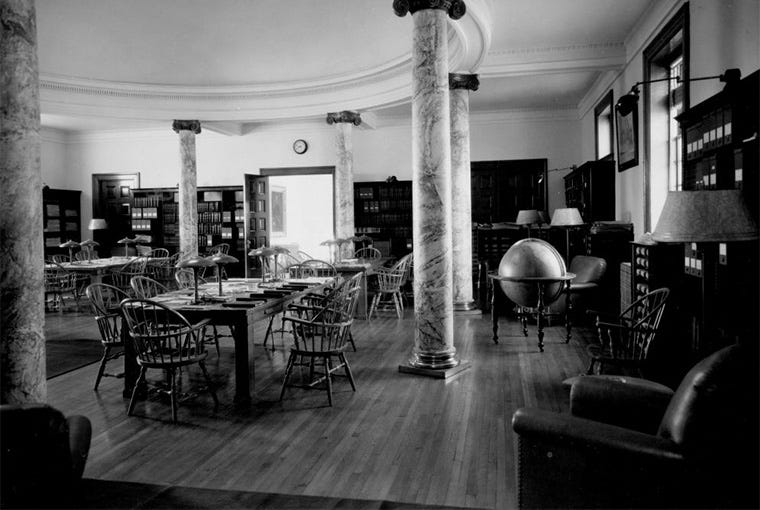
Institutional Homes are Required
The Laughton Naval History and Maritime Strategy Unit at King’s had provided a practical expression of this civilian mission. Established under Professor Andrew Lambert in 2001, it brought naval history and maritime strategic research into a community encompassing students, scholars and professional participants. Its published purposes included education from undergraduate to doctoral level, international scholarly exchange and engagement with audiences beyond the university. It was built to operate at scale while support from trusts, sponsors, and charities funded an additional academic post, administrative support and research scholarship. Subsequently naval history teaching provision doubled, so teaching, research and public access were connected parts of the undertaking. The Unit was deliberately placed within War Studies, who was initially supportive, in a place where naval history and the study of maritime affairs could contribute to wider questions and encounter other disciplines.
The long-running King’s Maritime History Seminars illustrate how such a community works. Hosted by the Unit alongside the Sir Michael Howard Centre for the History of War, and organised with the British Commission for Maritime History, Lloyds of London, and the Society for Nautical Research, the series has provided an open forum for presenting and discussing research. Its significance lies partly in the continuity of that exchange. A seminar allows a new scholar to test an argument before an audience capable of questioning it. It brings different periods, methods and kinds of expertise into conversation. Established researchers encounter work beyond their immediate specialisms, while students learn how evidence is debated and interpretations revised. Over time, these encounters create relationships through which supervision, collaboration and further inquiry become possible.
But the subject’s future rests with its students: their questions, their independent research and their willingness to enter scholarly debate. Their careers take them in many directions, but they carry an understanding of the sea’s place in history with them. This is where a university’s educational mission acquires its wider significance. Its graduates take that understanding into settings a naval curriculum cannot reach on its own.
Teaching also contributes to the production of knowledge. Preparing an argument for students requires a scholar to make its assumptions explicit, explain its evidence and answer questions that established specialists may have ceased to ask. Students can expose weaknesses in familiar interpretations, while their research opens subjects that a senior scholar could not pursue alone. The relationship between research and education therefore runs in both directions. A university sustains a field partly by creating repeated opportunities for its explanations to be challenged by people entering it for the first time.
For transparency, my own relationship with King’s and its ‘research community’ provides more than access to individual expertise. It offers an intellectual setting in which questions can develop, connections become visible and emerging scholars find an audience. Its contribution extends through the people it educates and the discussions those people subsequently carry into other institutions.
Laughton’s own experience reveals why this needs an institutional home. He sought a department that could develop researchers and give naval history a continuing place within university life. Its failure to materialise left the subject more dependent on individuals, and the loss of Laughton and Corbett weakened the connections they had sustained. Their books survived, but books could not appoint successors, supervise new research or secure a place in the curriculum. Intellectual achievement requires arrangements through which another generation can question, extend and renew it. Preserving a legacy includes maintaining the capacity to move beyond it. Today, not just in Britain, but around the world, naval history, the study of maritime strategy and ultimately the art of war and peace is becoming on the individual rather than forums or communities. It has gone full circle.

Seablindness as an Institutional Problem
Seablindness is for many a handy term to politely explain failure in education about the seas importance to government and nation. The superior way, as I have argued, is the institutional conditions under which maritime understanding is sustained, communicated or weakened. In my doctoral work and subsequent writing on the Admiralty, the Royal Navy and U.S. Navy, I have argued the way expertise is organised shapes the weight it carries in national strategic thought.
The educational implication is that understanding cannot simply be demanded from an otherwise inattentive public let along government We must ask where people encounter the subject, who has the expertise to teach it and what institutions sustain that work. This is more important, again, when ‘Admiralty’ no longer exists. Awareness may begin with an event, a news report or a public campaign leading to wrong conclusions, but it is informed judgement develops through opportunities to examine causes, relationships and competing explanations.
Educating more naval officers cannot, by itself, resolve the absence of those opportunities elsewhere. Officers can explain their profession and contribute to public debate, within civil-miliary relations rules. However, naval and marine officers are supposed to focus on being the ultimate sea (fighting) professional. Yet, time and again they have proven to be ill-prepared if not incompetent at public relations, administration and managing the education of the state to seapower. This is acceptable as that is how true navies have worked since the 1500s as such tasks even in naval organisations resided with civilians not naval personnel (aka Admiralty). Military personnel cannot collectively provide the education of every civilian profession whose decisions bear upon maritime affairs or more widely anything the military maybe involved with. Nor should the public have to depend exclusively on a service’s explanation of its own significance which can also get easily distorted by its own culture. Nor can uncritical navalism or the understandable concern of veterans fill the gap entirely. Navalists and veterans bring their own agendas, and some strengths from practical experience, but there are also issues with it as much of the ‘quality’ of today’s media debate shows. Equally academics and scholars should not attempt to best practical experience or things they know little about when others do. What is important is that independent scholarship gives citizens and decision-makers the means to evaluate the explanations put in front of them.
Civilian maritime education consequently has strategic value even when its graduates never work for a navy. Its influence may appear in the questions an official asks, the assumptions a journalist challenges or the connections a business leader recognises. These effects are difficult to capture through a simple measure of immediate policy impact. They belong to the slower formation of an informed public and a capable, educated state to the influence of the sea and today, the nature of war and conflict from seabed to space.

Sustaining the Capacity to Think and then Act
But danger is not new when it comes to resting on a few minds or many of the issues raised earlier. The field has been warned before that an apparently flourishing subject can lose ground through changing academic priorities, the departure of leading figures, service indifference and public apathy. The answer then, as now, is to widen the field’s conversations: to ask questions that engage other scholars and audiences, and to resist intellectual isolation. That remains a demanding standard. Sustaining naval history means giving it the capacity to renew its questions, develop its students and contribute to debates beyond its own community.
Laughton and Corbett help us understand why this work matters. They connect the critical study of history with the development of strategic judgement, while Corbett’s experience also exposes the pressures that can arise when historical conclusions inconvenience professional authority. Their legacy calls for continuing intellectual work: educating new audiences, developing scholars and maintaining forums where arguments can be tested freely. Sadly today, understanding of this within academic and the military is ebbing away.
The question of who will teach the state to think about the sea therefore has an institutional answer. It requires civilian departments or ‘homes’ able to teach the subject, supervise its future researchers and sustain exchanges across academic, professional and public life. Cooperation with military education enriches that undertaking. Its wider civilian purpose must remain explicit and supported.
A society, educated to the sea, (you can even apply this to space!) needs people throughout its institutions who can understand its relationship to national purposes, way of life, its success and exercise judgement about it. Universities help educate those people before their responsibilities become specialised and long after policy priorities have passed. Sustaining that mission is part of sustaining the state’s capacity for strategy.
Laughton began that work at King’s. Corbett extended it, and Andrew Lambert renewed it for a new generation in the challenging world of a disinterested higher education establishment. Each faced an uncertain future for the subject; none faced one as unclear as today’s. What is at stake is not simply recording naval history for future generations, nor even remembrance. It is learning how to think about strategy and how to act strategically. In the years ahead, from seabed to space, nothing will matter more.
Further reading
• Andrew Lambert, The Foundations of Naval History: John Knox Laughton, the Royal Navy and the Historical Profession (Chatham Publishing, 1998).
• Andrew Lambert, Laughton’s Legacy: Naval History at King’s College London, inaugural lecture delivered in the Great Hall, King’s College London, 14 November 2002.
• Andrew Lambert, The British Way of War: Julian Corbett and the Battle for a National Strategy (Yale University Press, 2021).
• Andrew Lambert, “Writing the Battle: Jutland in Sir Julian Corbett’s Naval Operations”, The Mariner’s Mirror (2017).
• James W. E. Smith, “Seablindness and the Royal Navy after 1964”, The Naval Review, 112, no. 2 (Spring 2024).