

Prussian Solider Carl von Clausewitz (1780-1831) is among the most influential figures in the history of strategic thought, reaching almost ‘god like status’ upon some. The saner strategic mind has studied his work in better detail then to believe that. His On War remains a cornerstone of military education, and his insistence that war must be understood in relation to political purpose is as important today as it was in the nineteenth century. Yet, there is a curious imbalance in how we remember the great strategic thinkers. Clausewitz is treated as a universal authority, while English historian and philosopher of seapower Sir Julian Corbett (1854-1922), arguably the thinker who took the study of strategy further, is still too often confined to the specialist world of naval warfare.
Recently, I argued that Corbett ultimately bests Clausewitz, and that the reason is scope. That deserves more than the paragraph I gave it in my paper about ‘What it means to be a Corbettian’. This is not an attempt to diminish Clausewitz or to suggest that his insights into war have ceased to matter. Corbett was himself a student to Clausewitz’s work, and their intellectual relationship is better understood through continuity than any form of opposition. Both used the best approach to understanding war and conflict: a sophisticated methodology to analyse experience. But Corbett addressed a larger problem: how a nation thinks about and exercises its power, not only in war but in peace, and not merely through military force but through the relationships between politics, geography, commerce, finance, diplomacy, communications, institutions and national interests.
That distinction may become increasingly important. Indeed, I suspect that the future of strategy will be more Corbettian than Clausewitzian, particularly in the era of Seabed to Space events, let alone conflict, or even war, even if those responsible for making it do not recognise the difference.
Start with what the two men share: both insisted that war is an instrument of politics and must be judged by the purposes it serves. Both distrusted formulas, ignored false prophets, technological saints, and system-builders. They both built their thinking from the study of experience rather than deduction from first principles. Corbett read Clausewitz closely and admired him, and he can fairly be read as Britain’s answer to the Prussian, building on his insight rather than rejecting it. The red flag for everyone is spotting the guesswork about the future of war and how little evidence it rests upon. It is merely there to flatters whoever is making it.
The clearest case is limited war. Late in his life, in a note dated 10 July 1827, Clausewitz recognised that his work had not done justice to a distinction he now saw as fundamental. Some wars aim to overthrow the enemy completely. Others pursue limited aims, such as seizing a frontier province to keep or to bargain with. He intended to revise the whole of On War around that distinction, and died before he could. What reached his readers was a book whose most developed parts still leaned towards the war of overthrow, the decisive battle and the destruction of the enemy’s forces.
Corbett took up the idea Clausewitz had left unfinished and made it workable. In Some Principles of Maritime Strategy(1911) he asked a question Clausewitz never fully answered: how can a state actually wage a war of limited aims, and keep it limited? His answer was what could not be ignored: geography. A continental power fighting a limited war can always be drawn into an unlimited one, because its enemy can march across the border and raise the stakes. A maritime power or island nation is different. If the sea separates it from the object in dispute, it can isolate that object, take it and hold it, while denying the enemy the means of escalation. Limited war, Corbett argued, is only permanently possible to island powers, or between powers separated by the sea. That is not a footnote to Clausewitz. It turns his late insight into a theory of how a particular kind of state can achieve its aims without staking its existence.
The dominance of Clausewitz reflects more than the quality of his work. It also reflects the intellectual and institutional circumstances through which modern strategy came to be understood. The development of professional armies, continental military establishments (unified defence departments) and their systems of education encouraged the study of strategy through the problems of war, campaigns and the application of force. Military history became increasingly concerned with explaining battles and operations, while strategy itself was often treated as an extension of military activity.
The reasons for this are explainable: continental states confronted borders that hostile armies could cross, territories that could be occupied and political settlements that might depend on the outcome of campaigns. The Prussian experience that informed Clausewitz was profoundly shaped by these circumstances. His achievement was to recognise that even the most successful military action could not be understood apart from political purpose. War had its own characteristics, but it was never independent of the state and the objectives for which it was fought.
Yet, Clausewitz’s intellectual achievement should not be confused with the habits of the continental military tradition that subsequently claimed him. A thinker who insisted on the political character of war could still become an authority within institutions whose attention was overwhelmingly directed towards preparing for and conducting it. The danger lay not necessarily in Clausewitz’s argument, but in the narrowing of strategy that accompanied its institutional inheritance. Corbett saw and experienced this risk in the 1910s and 1920s.
That inheritance was renewed at a decisive moment. The translation by Michael Howard (1922-2019) and Peter Paret (1924-2020), both continental land think Prussians (minded), published in 1976, made On War accessible to a new generation.1 American professional military education, rebuilding its thinking after Vietnam, adopted Clausewitz as the foundation of strategic study, and Harry Summers’ On Strategy (1982) used him to explain what had gone wrong. Corbett had no such sponsors. In the interwar years, British army solider, Basil Liddell Hart (1895*1970) ‘borrowed’ his ideas, if not defrauding them, repackaged them as the “British way in warfare” and diminished Corbett in the process. The institutions that had sustained Corbett’s thinking weakened, to the near point of dispareance. Clausewitz was taught because institutions chose to teach him. Corbett faded because the institutions that would have encouraged education of his work were deconstructed.
Corbett approached the problem of strategy from another direction. He was a civilian historian working within the circumstances of a seapowert state. Britain’s security and prosperity depended on relationships extending far beyond its shores. Its geography, resources, commerce, overseas interests and communications imposed demands that could not be met simply by possessing a powerful army or winning battles. The nation had to understand what it depended on, what it sought to achieve, which interests mattered most and how limited resources could be used to secure them.
For such a state, military force was indispensable, but it was not the whole of strategy. A fleet mean’t little apart from the national interests it served. Trade, finance, diplomacy, alliances, blockade and the movement of armies all formed part of one connected strategic problem. Corbett insisted that the sea mattered through its effects ashore, and that maritime power worked by controlling communications: the lines along which trade, supplies, people and armies moved. Victory in battle might be desirable, but it was neither the only means of achieving political objectives nor necessarily the most important. He understood, too, that command of the sea is normally in dispute rather than won once and for all.
This is why Corbett should not be understood simply as a naval equivalent of Clausewitz. Clausewitz wrote about war: its nature, its friction, its passions, its relationship to politics. Corbett’s subject was not merely how to fight at sea, but how a state uses force alongside trade, blockade, finance, diplomacy and alliances, with war as one instrument among several. That is national strategy, and it is the subject governments have to manage. Corbett was, and his ultimate work been about national strategy making than the operational-doctrinal nature of operations.
There is a further distinction: strategy does not begin when war breaks out, nor does it end when the fighting stops. Governments must continually secure their interests, maintain relationships, preserve prosperity, allocate resources and prevent the circumstances in which force becomes necessary. Peace is not simply an interval between wars and it’s why Corbett’s chosen method of study was navies, rather than armies (or later air forces). Navies have tasks to maintain the peace and are busy in peace time, their use different to the deployment of troops or aircraft. It is the principal condition that strategy should seek to preserve, and its maintenance requires sustained political judgement.
This is where the wider maritime tradition becomes particularly important. The oceans have never been exclusively military environments. They have been the means through which societies explored, traded, communicated, competed, accumulated knowledge and built relationships with distant peoples and places. Naval power emerged within that larger maritime world and cannot be understood apart from it. A state might possess formidable warships and still fail to exercise seapower effectively, because possessing military capabilities is not the same as using national power intelligently.
The distinction is not confined to the sea. It applies wherever governments mistake the acquisition of capabilities for the existence of strategy. Many have grown used to measuring military strength through inventories, budgets, technological sophistication and organisational structures. These things matter, but they do not answer the first strategic question: what is the nation trying to achieve? Without that understanding, the most impressive collection of capabilities (and technologies) may amount to little more than an expensive assortment of means without a coherent purpose.
Corbett’s advantage, however, does not rest solely on the breadth of his subject. It also lies in how he approached the problem of strategic understanding. As I’ve set out time and again, his method was grounded in the sophisticated analysis of historical experience. Corbett examined the circumstances in which governments made decisions, the alternatives available to them, the relationship between political objectives and military possibilities, and why particular combinations of instruments succeeded or failed. He was not searching for convenient historical parallels or compiling a catalogue of victories from which commanders could extract simple lessons. He was developing strategic judgement through the careful study of experience. The aim, is to let theory follow experience, but modern times shows theory protected from evidence can gain institutional authority while losing explanatory power.
Clausewitz, too, was a serious student of history, and it would be wrong to suggest otherwise. But Corbett’s particular achievement was to connect historical scholarship with a wider programme of national strategic education. His work was not intended simply to provide a theory for military professionals. It was directed at improving the capacity of a state to understand its circumstances and act intelligently within them.
That distinction has been increasingly neglected. Modern strategic debate frequently substitutes speculation (theory) for experience, technological prediction for historical understanding and fashionable concepts for careful analysis. Every generation announces some development that will supposedly transform the nature of strategy itself. Airpower, nuclear weapons, precision weapons, information technology, stealth, and now artificial intelligence and space have all encouraged versions of this temptation. Yet a transformation in the instruments available to a state does not necessarily transform the underlying problems of political purpose, geography, resources, human judgement and the use of power. The more rapidly technology changes, the greater the temptation to dismiss the past as irrelevant. Corbett’s method suggests the opposite. Novel circumstances make historical understanding more valuable, provided we understand what history can and cannot tell us.
There is another dimension to Corbett’s achievement that is often overlooked: institutions. Corbett did not work as an isolated intellectual producing theories for posterity. He worked within a network connecting historical scholarship, professional military education, the Admiralty, naval officers, civil servants and political decision-makers. His position as a civilian historian mattered. He could undertake sustained research, challenge professional assumptions and carry strategic ideas beyond the boundaries of the naval service. His value lay partly in the combination of his independence and his proximity to those responsible for national decisions. It showed that the capacity to think strategically must be cultivated and preserved. Experience does not automatically become understanding, and understanding does not automatically influence policy.
Here lies one of the great tragedies of Corbett’s legacy, and a curious parallel with Clausewitz. Both men left their great works unfinished. Marie von Clausewitz (1779-1836) published On War from her husband’s drafts in 1832, with the revision he had planned in 1827 incomplete. Corbett intended Some Principles as a living document to be revised in light of the First World War, and he never revised it and he had other works in the pipeline. Clausewitz’s incompleteness has been treated as profundity, to be interpreted endlessly by devoted scholars. Corbett’s was treated as obscurity. His ideas survived through a small number of followers until Bryan Ranft (1917-2001) and, above all, Andrew Lambert recovered his standing and showed the significance of his achievement.
But restoring Corbett’s reputation is not the same as restoring the capacity for strategic thought his work was meant to serve. A nation can teach Some Principles of Maritime Strategy, quote its arguments and still fail to understand what made them valuable: the United States, dominated by Prussian army style thinking in an monolithic Pentagon is a prime example of this. Corbett was not offering principles to be applied mechanically. He was showing how historical experience could become strategic understanding, and how that understanding could inform the decisions of government. My own work on the Admiralty, national strategy and defence unification keeps returning to this problem. Organisational reform does not necessarily produce strategic improvement, and the weakening of institutions can remove forms of knowledge and judgement that are hard to recover.
This is why the future may increasingly favour Corbett. The world is becoming more interconnected, from seabed to space, but the intellectual habits through which governments understand strategy have not always kept pace. National security and prosperity now depend on maritime trade, undersea communications, energy systems, international finance, orbital infrastructure, technological supply chains and political relationships that cross borders and military jurisdictions. These dependencies cannot be understood solely through the prospect of armed conflict, even though their disruption may become a cause or instrument of war. The defining contests of our time are not wars of overthrow settled by battle. They are long competitions over access, communications and economic advantage, conducted largely below the threshold of war. Those are Corbett’s subjects.
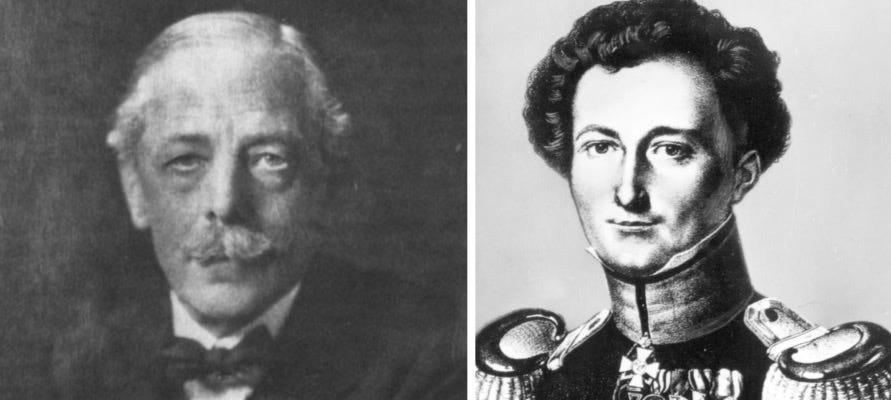
None of this makes Clausewitz obsolete, and a fair argument has to say what he still does better. His account of friction, chance and the fog of war has no equal. His trinity of passion, chance and reason captures something about war that Corbett need not mention rather than examined. His insistence that war has its own grammar, though not its own logic, remains the best short statement of the relationship between fighting and politics. Corbett relied on all of this. He did not replace Clausewitz; he placed him inside a larger frame. Nor has continental warfare disappeared. Territorial conquest, armies and the political consequences of military violence remain central concerns, as contemporary conflicts make painfully clear. None of this is hostility to theory but concepts make relationships intelligible. The question is only which comes first.
But a theory of war, however profound, cannot by itself supply a complete account of national strategy. Nor should the requirements of war determine the limits of what governments understand strategy to be.
The distinction becomes plainer when we look beyond the familiar boundaries of national defence. Space is a revealing example. It is already essential to communications, navigation, science, commerce, intelligence and the functioning of modern societies. Its significance will not be determined solely by the weapons deployed there or by the military organisations responsible for particular capabilities. The maritime tradition offers a substantial body of experience through which to begin examining it. That does not mean space is simply another ocean, or that the principles of naval warfare can be transferred uncritically into orbit. It means that societies have confronted before the challenge of sustaining activity across environments that transformed their communications, economies and relationships with one another. Corbett’s method asks us to examine that experience before declaring every problem in a new environment unprecedented, and to understand the whole before concentrating on its military parts.
Perhaps the most important implication is that the future of strategy cannot belong exclusively to military professionals. The responsibilities of national strategy extend across governments and societies. Political leaders, civil servants, historians, economists, scientists, industrialists and military officers all hold knowledge that must contribute to a coherent understanding of national interests. The problem is not simply assembling these people around a table. It is building the intellectual and institutional means through which their knowledge can inform strategic judgement. That was part of Corbett’s unfinished work, and it remains unfinished today.
To say that Corbett will best Clausewitz is therefore not to predict that one famous book will replace another on the reading lists of military colleges. Nor is it to suggest that maritime strategy should become a new orthodoxy. It is to suggest that the demands of the future may increasingly vindicate a broader conception of strategic thought: one in which war is understood within the continuing responsibilities of the state, military power within the larger exercise of national power, and historical experience as an essential foundation of political judgement.
Clausewitz remains one of the great interpreters of war. Corbett addressed a larger question: how a nation understands its place in the world, and thinks and acts strategically to secure its interests in war and peace. The intellectual history of strategy has long given Clausewitz the greater prominence. But prominence is not the same as completeness, and the reputation of a thinker is not necessarily a measure of the future usefulness of his work.
Unlike Clausewitz, whose underlying culture encouraged rigidity, students may enjoy another speculation of Corbett. He was a rebel: he was willing to question, to challenge and if the the evidence supports it, change his views. Today, I’d speculate, as a fellow rebel, he would have raised an eyebrow of much of the modern defence terminology, classifying them as nothing bar fluster and imagination. Elsewhere, quaint ideas of the ‘Freedom of the Seas’ and ‘Sea Control’ he would have been willing to revisit and evolve understanding of, if not abolish it. But most of all, he would have vocal about the state of national strategies, where domain warfare doctrine has overridden the national good and mass defence organisations have entirely lost their direction and purpose. The overriding message: advantage in action, advantage intellectually, will the best building blocks for the future of strategic thought and action. But a word of caution: you cannot educate those who do not want to be educated.
Behind the two men lie two schools of strategic thought, and the choice between them is the real stake in this argument. The first is continental. It grew from the experience of land powers, was carried forward by armies and later by the air forces that grew out of them, and is at its strongest in the tactical and operational realm, where problems are bounded and success can be measured in battles won and targets struck. The second is maritime. It grew from the experience of states that lived by the sea, and it sees the world as an interconnected whole of trade, communications, finance, alliances and power, in peace as much as in war. That view now extends from the seabed to space. Every nation draws on both, and needs both. The question is which frames the other. When the continental school sets the limits of strategy, nations become very good at fighting battles and very poor at knowing why, and that has repeatedly ended in disaster. When the maritime school frames the whole, and operational excellence serves within it, the two become a strength no rival can easily match. The interconnected world we now live in is pressing that choice on every government, whether it recognises it or not.
Clausewitz helped us understand war. Corbett may yet prove more important in helping us understand the wider business of strategy. And if the future demands that wider understanding, then Corbett’s greatest contribution to strategic thought may still lie ahead of us.
Better translations exist than this version. https://clausewitzstudies.org/mobile/whichtrans.htm