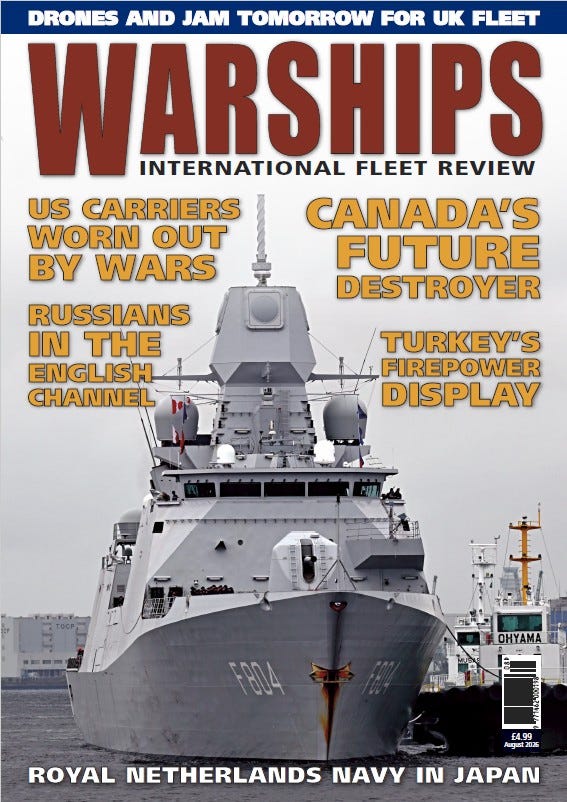
In the August 2026 edition of Warships International Fleet Review, (on sale in e-version and print in the UK & abroad after 17 July l 2026), I argue that the concept of hybrid navy is simply a smokescreen of a far bigger problem.
The end of British seapower happened in 2026. It’s remarkable that a few months ago, commentators, politicians, scholars, journalists and the public were transfixed by news of the Royal Navy’s seemingly steep and terminal decline.The crisis had been exposed to the wider gaze of the British people by events in the Middle East. These exposed that Britain had little hard punch at sea, reduced diplomatic clout and was more vulnerable than ever. The options available to the UK Government in a crisis had been reduced to little, partly of its own making. At the heart of the matter - like a ghost from history - was a question the British public have often asked feel about their security have asked across nearly five centuries: ‘Where is our Navy?’
There was a realisation that we are living through what is possibly the lowest ebb for the Royal Navy in its history. The answer to the crisis - so typical of the politicalised land-think dominated Ministry of Defence (MoD) and adjunct of the Treasury - was a plan of hopes and dreams set called a ‘hybrid navy’. That is, lots of drones to make up for a lack of warships. Brushed under the carpet was the fact that Britain is no longer a seapower, a naval power of consequence or, worst of all, no longer a maritime nation.
It is a state of affairs 500 years in the making, with the Navy decades in the deconstruction.
It was warned about by plenty of people. The architects of its demise - and there are many – might wish for the news cycle to rotate, so the story could be forgotten. It did so and they were all effectively off the hook. They only had to wait a while and, if asked, suggest that it was not their fault.The harsh reality is that governance and accountability of British defence remains a case study of failure in contemporary politics and the State, and a far cry from the days of Admiralty.
The so-called ‘hybrid navy,’ therefore, is an admission of failure, intellectually and practically. It’s a scape goat concept that while it functions to point out warfare is changing - as it always is – is symptom of what all militaries do when they’ve run out of ideas. When stranded in a deep hole they cling to the concept that sunny technological uplands will save them.
Yet the reality for the Royal Navy is there is no money, no resources, declining personnel, combined with ‘seablindness’ has completed its work of ruination. Few within government understand the sea - or want to - and that’s a mindset shared by most of the general the public. Even fewer know what national defence strategy should be. Meanwhile, the national pursuit of seamanship as part of best defence seems to have been tossed to the wind, but then that is inevitable when land-centric warfare doctrine tightens it grip to choke the truth from every being spoken.
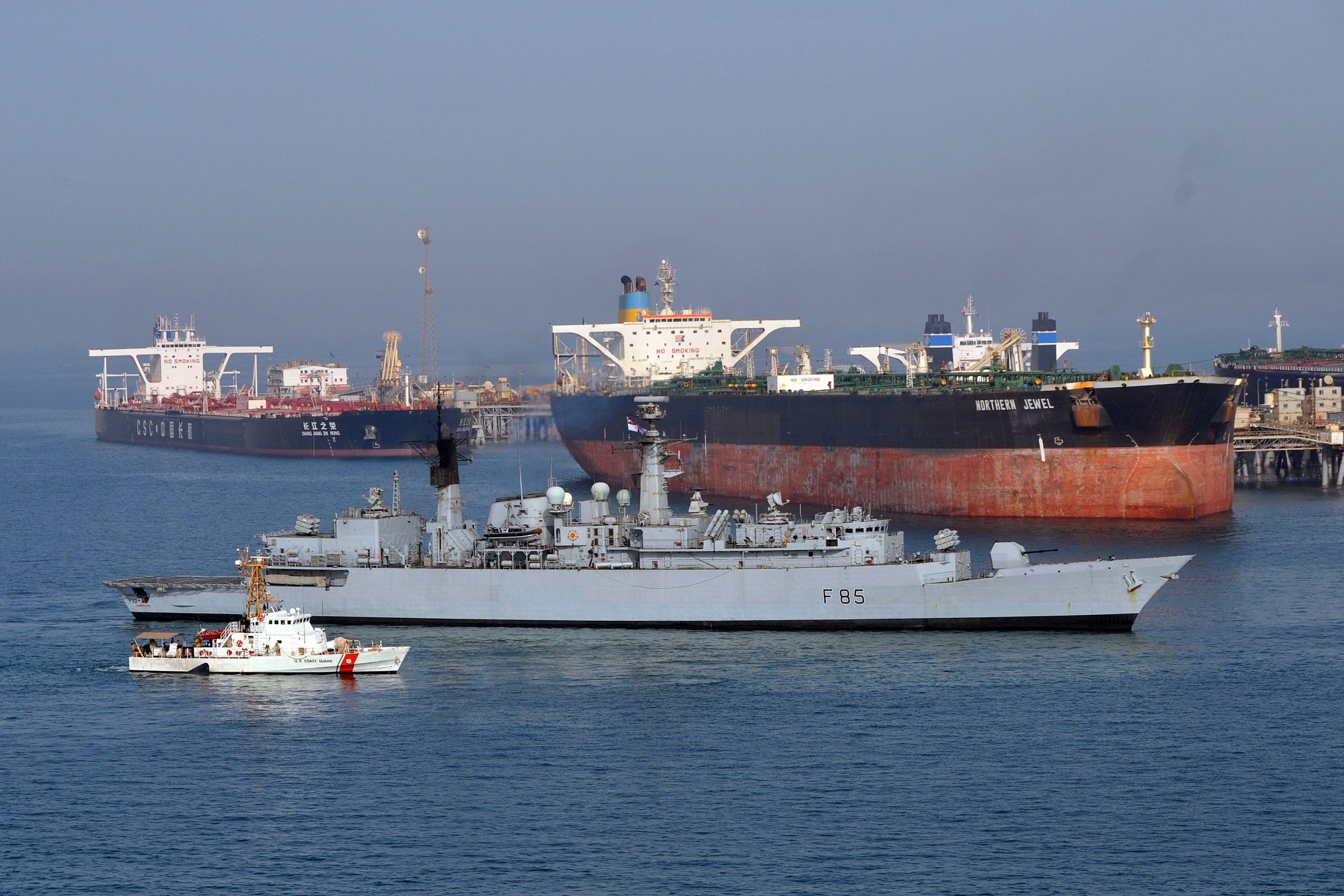
The hard work of centuries - achieved by sailors, marines, and civilians - seems lost because some in Whitehall and even in the Navy believe they are smarter than the full weight of strategic experience gained through 500 years of being an island nation. Military education led some there, it clearly isn’t working else we wouldn’t have seen statements and comments from politician and service leader alike as has seen the like the past six month. At the end of the day, the navy lost its brain with the abolition of Admiralty and has never recovered.
Fortunately, history offers guidance. Naval technology has always evolved, even when the character and objectives of war remain relatively stable. The evolution of navies suggests a meaningful pattern: radical transformation often leads to disaster, whereas phased introduction, development, and perfection have usually allowed platforms to mature, for example submarines and aircraft carriers have become indispensable over decades.
The critical point is that these advancements have augmented - not replaced - naval power nor seapower’s influence from seabed to space. To put it another way: the Navy’s core has remained constant. Hard power, firepower, presence, reach, resilience, people, training and capability have always been primary considerations, ready and able before anything else.
A hybrid approach – via Artificial intelligence (A.I.) and autonomy – is, therefore, no instant panacea and the rhetoric around it is dangerous. The sea is a complex environment - tough on equipment - and what works in test environments may not translate to the diverse geographic environments around the world. Attempting to replace all core capabilities with a single technological approach is essentially a pretext for acknowledging that the British government cannot maintain a robust Royal Navy. Some bury their heads in sand, thinking everything is well by totally embracing the hybrid navy concept while history shows time and again, a manned British warship, somewhere in the world has been the enabler of options and guarantor for pathways to warfare but more so, diplomacy and deterrence.
Meanwhile, warships take weeks to deploy, submarines are laid up, ammunition stocks are low, and sailors leave the Service in droves out of boredom. Getting the fundamentals right should be the priority, not risking everything on a technological utopia. What these new technologies enable us, is to think about the offensive and defensive capabilities of warships in the future, not give into sweeping statements of the relevancy of navy.
History shows such approaches won’t deliver near the promises made. For every offensive weapon or platform, someone invents a defence as they will for drones. Past examples of the ‘silver bullet’ range from the atomic bomb ending all war, to stealth and missiles reshaping the military and war fundamentally. Eventually they revealed as not the perfect solution some suggested. What sounds revolutionary in theory often rationalizes into something more realistic over time.
We must remember that technology cannot be held accountable, nor is it effective, for governance. Therefore, we must be careful about taking the human element out of war. The White Ensign on the horizon, with British sailors and Royal Marines enables diplomatic heft with the threat of force underscoring it, far beyond Britain’s other means.
A hybrid navy becomes more palatable when pressing issues – such as no attack submarines at sea, and no frigates reduced to pathetic numbers - receive attention and are made better, with the core of British seapower remaining intact.
Open-mindedness toward new technologies is wise, but so too is recognizing that if something isn’t broken, don’t fix it. Learn from it, create a tradition of excellence. Extreme openness undermines institutions, possibly enabling a dangerous willingness to embrace change which risks everything, such is the ‘hybrid navy’. One can not ignore the rushed concept of a hybrid navy is based on some dodgy analysis of events in the Ukraine war, many that operated in environments different to what other navies face or circumstances unique to that setup. This is dangerous line of thinking that time and again, history shows, when military services kneejerk react, it can lead to disaster.
It is an approach that deflects from a fundamental question: why do generations who inherited a superior navy pass on a weaker, poorer one? The ‘hybrid navy’ concept risks functioning as an excuse, allowing those accountable off the hook for failing to maintain British seapower’s core. That core must be manned, capable, superiorly trained, well equipped and globally deployable assets in the form of warships and they must be in numbers to deliver the presence needed. However the core is now so weakened it cannot even deter adversaries’ actions in the English Channel, such as the recent episode involving the Russian frigate RFS Grigorovich - action other than by the Royal Navy’s choosing in the channel was something unacceptable for centuries politically, publicly and the entire military establishment, even during Britains darkest hours of World War Two. In that example alone, you can see just how far Britain is failing in the basics of naval power: the nation that not only wrote the book on it, through experience, but led other navies to aspire to equal if not best it—like the United States Navy. The hybrid navy is a smoke screen for many to hide behind from accountability to the reality that Britain has failed as a naval and sea power.
Want to read more?
The Royal Navy 1546-2026?

In March 2026, Britain failed to adopt its own definition of maritime nationhood, sea power, and naval strength—a framework ironically crafted by its intellectuals based on centuries of accumulated cultural, political,…
A version of not the article is available in print and e-print. The publishers website is:
https://warshipsifr.com/
Please support publishing where and when you can.